Support the show:
https://www.paypal.me/Truelifepodcast?locale.x=en_US
One on One Video Call W/George
https://tidycal.com/georgepmonty/60-minute-meeting
https://www.paypal.me/Truelifepodcast?locale.x=en_US
One on One Video Call W/George
https://tidycal.com/georgepmonty/60-minute-meeting
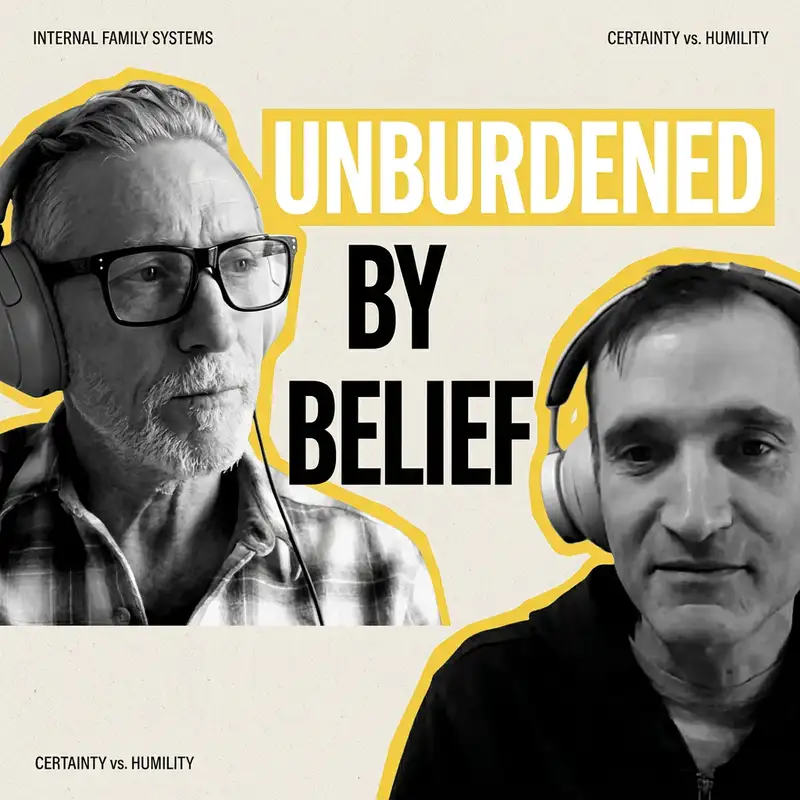
Ladies and gentlemen, welcome back to the True Life Podcast. In today's episode, I had the pleasure of speaking with Joshua Pritiken, a psychologist, IFS practitioner, and author of the thought-provoking book "Religion Unburdened by Belief." Joshua's work delves into a fundamental question at the crossroads of psychology, religion, mysticism, and philosophy: What if the essence of spiritual life lies not in the accumulation of beliefs, but in cultivating an openness to mystery?
### The Burden of Belief: An Exploration
In our conversation, we explored the idea that belief might not only be integral to religion but could also be its greatest burden. Joshua's insights challenge conventional wisdom by suggesting that the expectations tied to beliefs often prevent genuine exploration and understanding. For instance, he references the work of James Carse, whose book inspired him to examine the dichotomy between belief and religion more deeply.
### Understanding Different Types of Beliefs
Joshua categorizes beliefs into two distinct types: content beliefs, which pertain to specific doctrines or outcomes, and process beliefs, which guide practices like meditation. He argues that while process beliefs are essential for spiritual practices, content beliefs often create unnecessary barriers to true spiritual experience. An example he shares is the risk of having preconceived notions about meditation, which can limit the depth of experience and understanding.
### Embracing Uncertainty
A significant theme in our discussion is the discomfort many feel regarding uncertainty. In today's world, where a false sense of certainty is often constructed, Joshua encourages listeners to embrace uncertainty as a pathway to deeper understanding. He draws parallels between this uncertainty and experiences with psychedelics, suggesting that the lack of certainty can lead to profound insights and connections to the mystery of life.
### From Belief to Knowledge
We also touched on how beliefs can evolve into knowledge. Joshua explains that the context and type of evidence required to validate beliefs vary greatly. For example, beliefs about the weather can be easily verified, while beliefs in more abstract domains, like art or religion, often lack definitive evidence. This leads to the conclusion that while it's not inherently bad to hold beliefs, we should approach them with a degree of skepticism and openness.
### Key Takeaways
1. **Challenge the Burden of Belief:** Recognize how beliefs can limit spiritual growth and understanding.
2. **Differentiate Between Beliefs:** Understand the distinction between content and process beliefs and their relevance to spiritual practices.
3. **Embrace Uncertainty:** Learn to find comfort in uncertainty as a pathway to deeper insights.
4. **Evolve Beliefs into Knowledge:** Acknowledge the importance of evidence and context in validating beliefs.
In conclusion, Joshua's perspective offers a refreshing lens through which to view spirituality and the role of belief. By fostering a sense of openness to mystery and uncertainty, we can enrich our spiritual journeys and cultivate a deeper understanding of ourselves and the world around us. If you'd like to explore more about Joshua Pritiken's insights, check out his book "Religion Unburdened by Belief."
For more on this topic, consider listening to the full episode of the True Life Podcast.
Buy the book:
https://www.amazon.com/Religion-Unburdened-Belief-Open-Inquiry-ebook/dp/B0GT24Z79H
### The Burden of Belief: An Exploration
In our conversation, we explored the idea that belief might not only be integral to religion but could also be its greatest burden. Joshua's insights challenge conventional wisdom by suggesting that the expectations tied to beliefs often prevent genuine exploration and understanding. For instance, he references the work of James Carse, whose book inspired him to examine the dichotomy between belief and religion more deeply.
### Understanding Different Types of Beliefs
Joshua categorizes beliefs into two distinct types: content beliefs, which pertain to specific doctrines or outcomes, and process beliefs, which guide practices like meditation. He argues that while process beliefs are essential for spiritual practices, content beliefs often create unnecessary barriers to true spiritual experience. An example he shares is the risk of having preconceived notions about meditation, which can limit the depth of experience and understanding.
### Embracing Uncertainty
A significant theme in our discussion is the discomfort many feel regarding uncertainty. In today's world, where a false sense of certainty is often constructed, Joshua encourages listeners to embrace uncertainty as a pathway to deeper understanding. He draws parallels between this uncertainty and experiences with psychedelics, suggesting that the lack of certainty can lead to profound insights and connections to the mystery of life.
### From Belief to Knowledge
We also touched on how beliefs can evolve into knowledge. Joshua explains that the context and type of evidence required to validate beliefs vary greatly. For example, beliefs about the weather can be easily verified, while beliefs in more abstract domains, like art or religion, often lack definitive evidence. This leads to the conclusion that while it's not inherently bad to hold beliefs, we should approach them with a degree of skepticism and openness.
### Key Takeaways
1. **Challenge the Burden of Belief:** Recognize how beliefs can limit spiritual growth and understanding.
2. **Differentiate Between Beliefs:** Understand the distinction between content and process beliefs and their relevance to spiritual practices.
3. **Embrace Uncertainty:** Learn to find comfort in uncertainty as a pathway to deeper insights.
4. **Evolve Beliefs into Knowledge:** Acknowledge the importance of evidence and context in validating beliefs.
In conclusion, Joshua's perspective offers a refreshing lens through which to view spirituality and the role of belief. By fostering a sense of openness to mystery and uncertainty, we can enrich our spiritual journeys and cultivate a deeper understanding of ourselves and the world around us. If you'd like to explore more about Joshua Pritiken's insights, check out his book "Religion Unburdened by Belief."
For more on this topic, consider listening to the full episode of the True Life Podcast.
Buy the book:
https://www.amazon.com/Religion-Unburdened-Belief-Open-Inquiry-ebook/dp/B0GT24Z79H
One on One Video call W/George
https://tidycal.com/georgepmonty/60-minute-meeting
Support the show:
https://www.paypal.me/Truelifepodcast?locale.x=en_US
https://tidycal.com/georgepmonty/60-minute-meeting
Support the show:
https://www.paypal.me/Truelifepodcast?locale.x=en_US
🚨🚨Curious about the future of psychedelics? Imagine if Alan Watts started a secret society with Ram Dass and Hunter S. Thompson… now open the door.
Use Promocode TRUELIFE for Get 25% off monthly or 30% off the annual plan For the first year
Legal Disclaimer / Release of Liability for Podcast:
This content is for educational and informational purposes only. Nothing in this transmission constitutes legal, financial, or professional advice. I am not your lawyer, financial advisor, or telling you what to do.
This podcast documents historical events, analyzes publicly available information, and explores hypothetical scenarios. Any actions discussed are presented as educational examples of how systems work—not as instructions or recommendations.
You are solely responsible for your own decisions and actions. Any application of information presented here is at your own risk. I assume no liability for consequences of actions you choose to take.
By continuing to listen, you acknowledge that this content is educational commentary, that you’re responsible for researching applicable laws in your jurisdiction, and that you’ll consult appropriate professionals before taking any action that could affect your legal, financial, or personal situation.