Logan (00:01)
Right. Live.
George (00:03)
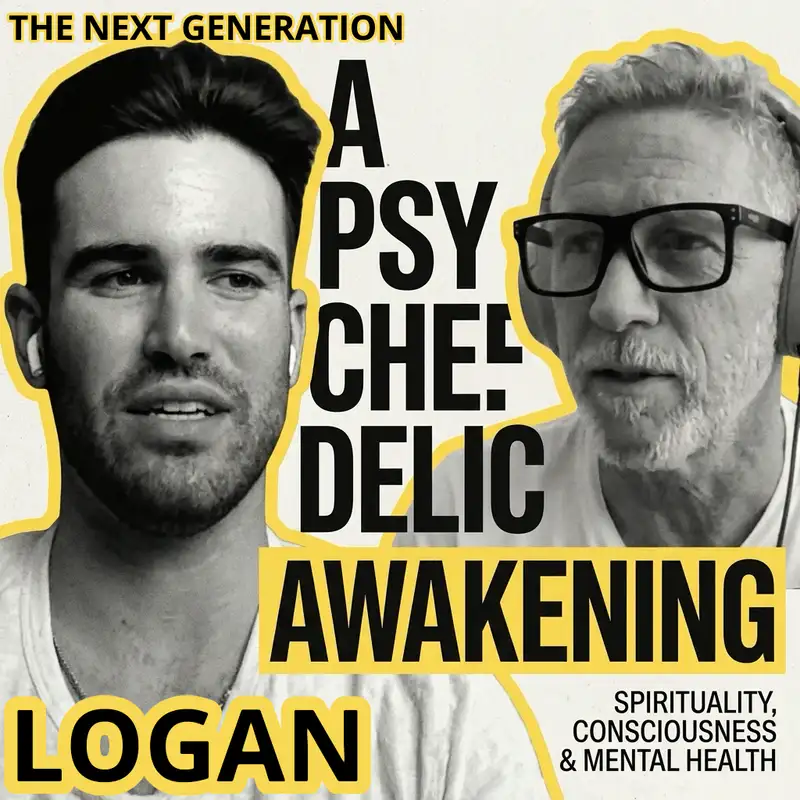
Live ladies and gentlemen, welcome back to the True Life Podcast. Hope you're all having a beautiful day. I hope the sun is shining. I hope the birds are singing. I hope the wind is at your back. I got a brand new show for you today and a whole new twist on the True Life Podcast. I'm talking to the next generation. I call this whole series the next generation. Talking to an amazing
Logan (00:24)
Yeah.
George (00:25)
young individual right here we met at Vertex Climbing Gym.
If you guys are climbers and you're in California, I highly recommend you check out Vertex Climbing Gym, a lot of cool people over there. My guest today is Logan. He's in his 20s, a climber, and works as a zipline guide. He's interested in consciousness, spirituality, mental health, extreme states of mind, nature, and what it means to live an active and meaningful life. He reads Eckert Tole. He spent time learning about mania and psychosis. He spends a lot of his life suspended between the ground and the sky.
And he's part of a generation that is going to inherit a world radically different from the one that I grew up in. So I'm less interested in telling Logan what I think about the future. And I'm interested in asking him something I've been thinking for a long time. What do you see that we cannot? Logan's an awesome guy. We've had some awesome conversations. So I just want to turn it back over to you, Logan, man. First off, how are you? What's cracking? What's new, man?
Logan (01:20)
Dude, thanks man. What an intro. Yeah. things have been pretty great lately, you know. just just been doing my thing, climbing a lot, playing volleyball, living that active
George (01:32)
Yeah.
Logan (01:32)
lifestyle. So yeah, stoked that we met at Vertex, that one day. And yeah, you guys, thanks for having me on the podcast. Yeah.
George (01:40)
Yeah, man, I'm grateful for it. I'm
grateful for it. You know, I one thing I've learned in my life is that we use all these labels. Like
Logan (01:47)
Mm.
George (01:47)
I'm George the father. I was George the truck driver. I'm George the podcaster. There's
Logan (01:51)
Mm-hmm.
George (01:52)
all these labels we slap on each other, you know, but I don't think they accurately really define who we are as a person, man. Let me throw this over
Logan (02:00)
Mm-hmm.
George (02:01)
to you. This is a this is an interesting question. Besides the resume Logan, besides what it is that people may say about.
you like how would you describe yourself?
Logan (02:09)
Hmm.
Mmm. Yeah. I like that question.
George (02:14)
Yeah, me too.
Logan (02:16)
yeah, first off, I'm I'm very into spirituality. So at 16 I had a whole spiritual awakening that started when I started reading Eckhart Tole, and my stepmom, who is one of my greatest mentors in life, incredible human being, so blessed that we met. She showed me Eckhart Tole at 15.
And I started listening to his his audible through the open door, talking all about the present moment. And I just fell in love with that way of being. And at that time I was going to Ecuador for my second time in high school
George (02:49)
What?
Logan (02:49)
with a program called Global Student Embassy. We're we're going down there with Ecuador, hanging out with the locals, doing projects. so that kind of spurred this whole spiritual awakening thing. I was listening to Eckhart like nonstop down there.
It was my first time falling in love with a girl that was in my
George (03:06)
Yeah!
Logan (03:07)
class and it was like this this all of a sudden like I went from like kind of like in my shell, like, you know, still like f social, like from the time I was, you know, teenager, kid, but then I just like exploded, like when I was sixteen. and I like got all into consciousness and like all into the present moment and like what it really means to like have that, you know, that peace, that presence. So that that's the first thing that comes to mind when I talk when I wanna talk about
going through any labels and, you know, crap like that. Yeah.
George (03:38)
Man. Fifteen,
going to Ecuador. Like what an awesome beginning. Like, dude, you're a young man at the age of fifteen. Like you are a young man seeing
Logan (03:48)
Yeah.
George (03:48)
the world in ways that most people don't, man. Finding some awesome, beautiful young woman to spend time with. Well, what kind of projects were you doing in Ecuador?
Logan (03:55)
Yeah.
in Ecuador we were we were like helping like the the local kids. P maybe just like like hanging out with the local kids. We have the global student embassy, so they were showing us kind of the works, you know. In Ecuador they're a lot tougher than us in the US. So like they they know all about like macheting and stuff and so we're us white kids we're we're trying our best to hang with them. But you know, they were sh we were s trying to build some stuff. But for the most part we were just like bonding down there, just having like a great time.
And it was just super magical. So yeah, grateful for that experience for sure. And that's kind of what started me into this road of like spirituality and and mental health and consciousness.
George (04:35)
It's interesting, like I've it seems to me, at least through my experience, when you travel,
Logan (04:41)
Mm-hmm.
George (04:42)
like you're in a radically different mindset. You know,
Logan (04:44)
Mm.
George (04:44)
like you are seeing things for the first time, having brand new experiences. And you said that was your second trip down there. Was that your second trip down
Logan (04:52)
Yeah.
George (04:52)
there?
Logan (04:53)
Yeah, so the first time it was in freshman year and
George (04:55)
Okay.
Logan (04:57)
and it was incredible, right? Like it was amazing seeing the world from that different perspective. My first time, you know, traveling without my parents, you're really like growing into that adult, going into that man. But then it was sixteen when I like I really like felt myself mature into that like obviously you have several steps along like your path to adulthood, but that was a huge turning block where I was like felt felt that connection. And that's the first time I had felt
connection to that strong to other people around me, the environment and the universe, like i in that trip and that that was the first time it just all hit me. I like boom, I was like, this is this is like what I want, you know.
George (05:36)
What was that through a program? Like, let's say there's like some parents listening right now, or maybe some younger people that are like, dude, I'm fifteen, I want to go to Ecuador. Like, how did that how did that happen, man?
Logan (05:40)
Yeah.
So I don't know. I haven't kept up if they're still going, but it is Global Student Embassy. It's sh short G S C. It was through Annally when I was at Annaly. and then right before I went to Orchard View, that we I could still go. So yeah, I don't know if they're still around, but I'm sure there's pr plenty of programs like that through high schools and such that that still and I know they're out there that still take
take kids out and it's just an incredible experience. I definitely recommend any teenagers, any parents listening, so you it's so good to travel when you're in high school and and explore the world.
George (06:20)
Yeah, without a doubt. What are those were those private schools? Was that home school? Was it a public school?
Logan (06:24)
No, I
Annalie High School is is the big public high school in Sebastopol where Thirteen Regions Why was filmed. Huge school. yeah, and then so they were just it was just kind of a non profit that was working through us. Yeah.
George (06:37)
Man,
you know what? There's so many great, there's so many great opportunities out there for people if they look. You know, and I think whether you're a student or whether you're a parent, like the opportunities are out there for people to really explore the world. And they come through all kinds of schools and I recommend everybody who's a parent take a look at something like that. Like, why not try to get as much out of life as you can? You said your stepmom. Was it your stepmom that was the greatest, one of the greatest influences on your life, one of the greatest mentors?
Logan (07:05)
Yes, yes, my stepmom.
George (07:06)
Can you tell me tell me about that relationship
a little bit and why she's one of the greatest mentors of your life?
Logan (07:11)
Yeah, so my stepmom is incredible. I met her when I was eleven and but our r a relationship didn't fully it just y started developing and didn't like really get started in that spiritual way until I was like fifteen and she was kinda helping me through that like normal high school depression.
George (07:31)
Yeah.
Logan (07:32)
And then of course she showed me at Cartole and she was just such an anchor for me 'cause like anyone that's had a spiritual awakening
knows that sometimes it can be a little bit crazy when you go through that.
George (07:43)
Yeah.
Logan (07:43)
You're like going through different like fields of consciousness. People are thinking you're crazy, maybe, you're dealing with mania, you know, the whole thing. So she she was a huge teacher, like like every question I could ever have asked. She like she has this innate wisdom and she's so intelligent that she just knows how to guide me and also just insanely compassionate. So I I've I it started there with her.
And then throughout, she helps me through my entire young adult career because I went through even more crazy shit and even more crazy stuff. yeah. Do you is okay, is swearing okay on here? Okay, cool. Even
George (08:21)
Dude, fuck yeah, dude.
Logan (08:23)
more crazy shit. And I just I went, yeah, and so she she's just the most intelligent, like spiritual mentor, like guide, along with my my father, just equally as much. He's just in a different way, obviously.
But yeah, my stepmom huge, huge guy in that.
George (08:43)
What do you mean when you say normal high school depression? Like like let me put like when I look at my high school depression, I think of like,
Logan (08:47)
Okay. huh.
George (08:50)
Man, am I good enough? What the fuck am I doing? Like, does this girl like me? How do I why why don't I have this thing? Why do these people have that thing? And I would be pretty hard on myself,
Logan (09:01)
Mm.
George (09:01)
like going through there, you know? And I I don't know if that's what all kids go through, but that was sort of my when I look back at it now.
Sort of a young guy trying to find himself. But I don't know that I would call it depression. Would you use the word depression? What is a normal high school depression? What did that mean?
Logan (09:16)
Hmm. That's interesting because I feel like with the newer generations it's it's getting more people are getting a
George (09:22)
Yes.
Logan (09:23)
little bit more depressed and they're having more hard feelings younger. And I I would say even less of me, but like like the current current generation has even worse than I had like eight years ago. but I think I don't know, I just think that that social media and like comparison, like 'cause it was already hard as a high school kid, but then when you bring in all this like extra stuff
That we got here, I think that it definitely is amplified now. But I'd also think it's just an individual personal journey. So like for me, I just before you know, when I was still figuring out before the spiritual awakening, still dealt with insane stuff after, but before it was like still a lot of like anger and like existential angst, you know, which I assume is like normal for I think just high schoolers vary to the d degree they have it. but I definitely had a lot of that. I was just like
Why like what am I doing here? Like why am I w you know? And so that that's what the spiritual aspect like helped me a lot get those answers and that's why I was grateful for that. But before that I felt a little bit lost in that way.
George (10:25)
Yeah.
Logan (10:27)
Yeah.
George (10:27)
You had mentioned that you were going through some crazy shit, man. Like
Logan (10:33)
Mm.
George (10:33)
what was some of the like the beginning crazy shit that was happening to you, like that made you have this? If you want to talk about it, I don't wanna put you Okay, good, me too.
Logan (10:37)
Yeah, man I I I do wanna talk about it.
I I I've had a pretty crazy story. There's a
George (10:45)
Okay.
Logan (10:45)
lot a lot that's come up. But after the spiritual awakening I first I dealt with dissociation. We'll s start start with that. And if if you've if in anyone's if they've never if you've never dealt with dissociation it's kinda hard to describe but it's it it's almost like feeling like when your soul like leaves your body.
So like I was dealing with some like crazy like family, like lineage stuff. My stepmom likes to talk about it and I was just like going I was just going back and forth between dissociation. So that was that was the first part and then I had this whole story about like I had something come up and then I had some like mania and I had to go down to Sedona, Arizona, and it was that's the whole story. but there's a lot in
into impact with that, so yeah.
George (11:38)
Yeah. I know.
When I think of disassociation, I think of
Logan (11:46)
Mm.
George (11:47)
like
I know my my parents got divorced when I was pretty young. I didn't fucking understand. Like I thought I was the problem.
Logan (11:54)
Mm-hmm.
George (11:55)
Like, okay, maybe it's me. And so I think there was some some disassociation there with like society, like kind of going inward and not having anybody to talk to. You know, it's
Logan (12:07)
Mm.
George (12:07)
it's interesting to think. How would you like how would you define disassociation? Is that like you you had mentioned like your spirit leaving your body? I would imagine that would leave you pretty unhappy.
But were you also withdrawing? Was it like a withdrawal from society as well, or from yourself or from your family, or what was that?
Logan (12:23)
Yeah, I remember like when I first started dissociating, it was like during COVID. So you had that on top of it.
George (12:29)
Mm.
Logan (12:32)
but I just had I was definitely I definitely battled my demons young because I had a lot of just like health anxiety, hypochondria that kinda related to my body and that anxiety kinda spurred this whole like dissociation thing where for me it was like I I was
in my body and then all a sudden something would happen and like I would just like leave and I would be like I would be like unrecognizable. Like if you if you saw me like my face would change like it it literally like looked like my soul like left my body and I was just like it it was crazy. And
George (13:06)
What? Yeah.
Logan (13:08)
then so then it would be like a week of like I don't know anywhere from two days to like a week of that and then all of a sudden I would it would like I would like be able to get myself back and it would feel like my energy would like rush back into my body.
And all of a sudden it would be like the most like intense like feeling that it was like so good to be back, but at the same time
George (13:27)
Yeah.
Logan (13:28)
it's like that's just because I was gone. So I w I would have these like I would be na I navigated this for about seven, eight months with my stepmom and dad of kind of like going back and forth trying to so I I've really experienced like the horror of what it feels like to like really be out of your body, like really gone and you know, it's not not good. So yeah.
George (13:49)
Yeah.
I would imagine like
That could lead, like luckily for you, and with the help of some awesome people, it sounds like, you're able to navigate that. But if that feel I bet you there's people that feel that and have no idea what's going on. Like that could lead to
Logan (14:08)
Yeah.
George (14:08)
being hooked on antidepressants, or that could lead to like going down and being in a trauma center or something like that. Like that sounds fucking
Logan (14:17)
Mm-hmm.
George (14:18)
frightening, man.
Logan (14:19)
And that and that's the main reason that I really do feel like a calling to work in mental health. Like I'm not
George (14:24)
Yeah.
Logan (14:25)
sure where my path leads, but like I feel like I was presented these experiences young so I can help people. Because I have all this wisdom and knowledge about these things, mania, psychosis dissociation, and I went this route of of not going like of course, you know, I've I went into the system little bit, they put me on meds, but then I I got off of meds, I got off meds twice.
And it's like I've been living this this med-free life for for four years now. And like it's just so much happier that way. And I really advocate like advocate for it because I went to this incredible program called Alternative to Med Center in Sedona. And so yeah, that that's that's a big reason, like a big calling for me of of this path that led me didn't lead me down this like being, you know, like you said, on antidepressants and all med it up and finding the other ways of of dealing with
your struggles, the the dark night of the soul, you know, everyone a lot of people go through I don't know everyone, everyone's path is different, but for me it definitely was an intense dark night of the soul.
George (15:24)
Well it was it's called alternative med alternative meds in it in
Logan (15:28)
Yeah.
George (15:28)
Sedona?
Logan (15:29)
It's called Alternative to Med Center in Sedona and that is the greatest place I've ever been in my life.
George (15:34)
Yeah.
Logan (15:36)
it's it's the most incredible if you've ever been to Sedona, it's the most incredible place. Like other than here where we live in Sonoma County, I love it. I'm I'm actually going back in October for the first time since I was eighteen. I miss it so much. It's you just have to go to Sedona to understand it. Like not not just the views and the hikes, but there's
energy vortexes that people believe that are there that I I really believe you can feel this this potent energy, this healing energy that brings stuff up. It's just intense. It's awesome. yeah, I love Sedona.
George (16:09)
What were they teaching you down there? Like it sounds to me like they're teaching you to
Logan (16:12)
Yeah.
George (16:12)
come into who you are as a person and see reality and alternative states of consciousness in a way that sort of makes you be less afraid of who you are and what you're encountering. But what maybe you could describe like what what were the experiences down there when you went down there?
Logan (16:29)
Yeah, yeah, I'll give give just a little story 'cause like I did I did go there
George (16:32)
Yeah, please.
Logan (16:32)
when I was eighteen and I was dealing with all the mania and psychosis from this traumatic event that happened. and I my my stepmom and my dad found this place for me and they were like, Hey, like do you wanna go down to Sedona? Like, I feel like, you know, there's you need to kinda go away for a while because there's stuff you need to deal with that more than we can handle up here. And I was like
I was like, yeah, that that sounds amazing. So at 18 years old, I just had a bag, had the flight down to Sedona to ATMC, and I remember feeling feeling like pretty like scared and alone, but also feeling like a deep calling for like this is what I'm supposed to do, and also really brave. so then I I got off the plane, I I found this place and it's just it's in the heart of Sedona.
It's this incredible treatment center that they deal with everything. their main goal is to get people off of meds that that come there for f years of antidepressants. You know, there was pe the ol I was the youngest at eighteen, but then there was all people that were eighty that have been on meds for sixty years. but they deal with other things too, like like there was a kid that was like deep into psychosis that was there and
It's sh it's an incredible place because not only does the the staff they care so much and it's like a family, but the the pa the like the patients there, the the people that are there, it's like you bond so much over healing yourself in this in this area. And there was like times in ATM C where I was like this just this two month period but I was closer to these people than I had experienced like ever with anyone, like even in a different way than my own family.
And yeah, I'd be happy to get into like the details. We did like sauna sauna five days a week for two hours. That was the whole detox shop. we went on hikes and there's there's so many stories, so much I could talk about from this place. But but yeah, I'm going back to visit it in October for the first time in in five, six years. So I'm so excited.
George (18:41)
What it sounds to me
like it sounds to me like a rite of passage,
Logan (18:44)
Mm.
George (18:45)
like coming into adulthood, like at the age
Logan (18:48)
Mm-hmm.
George (18:49)
of fifteen or sixteen. And in the Western world, like we don't have that, man. Like you there's no rites of passage anymore. But it sounds to me
Logan (18:55)
Mm-hmm.
George (18:56)
like, hey, here's a young person fucking experiencing these radical emotions, these radical spiritual ideas about who he is, about the life, about his relationship to the planet, to the world and himself.
And most people say, okay, well, whoa, here's a drug, man. You better shut that off. We don't we don't want you to think about that kind of stuff. Don't you know you could be a policeman
Logan (19:16)
Yeah. Right.
George (19:19)
or you could be a lawyer? Why'd you want to be one of these pre-cut out ideas? We already have them mapped out for you. And young
Logan (19:22)
Yeah.
George (19:25)
people, and it sounds to me like you're like, fuck, I don't dude, what about this? What about this radical
Logan (19:29)
Mm-hmm.
George (19:30)
spiritual nature I'm I'm experiencing over here, man? It what do you think about when I say rites of passage? Does that feel like what it was? Or what comes to mind when I say rites of passage?
Logan (19:41)
Yeah, Rice of Passage, I I've totally l that concept because, you know, I obviously listen to other podcasts and they talk about how there used to be that in in other like in tri tribal times and we do feel like we miss that a bit in our modern world. And I was kind of I f I don't know if lucky is the right word, but I did experience that, a form of that when I was eighteen. And so yeah, I I mean a memory comes to mind
I feel like my like spiritual, mental health rite of passage was definitely like eighteen, like a night at eight T C when I I I really like felt for the first time like, Okay, like I'm ready to become a man. and I rem I remember like a specific moment where that happened for me. So yeah.
George (20:32)
Let's talk about that, man. What was that specific moment, man?
Logan (20:33)
Let's talk about the moment, yeah.
Yeah. so I'll I'll I'll try I'll not tell the the full story, but it was it was towards my last quarter at ATM C and I was dealing with a bunch of like you know, the cr cra I had crazy insomnia then 'cause I dealing with like mania and psychosis and figuring out all this trauma and ATM C is so cool because they let you experience what you need to experience and like
And th you can go pretty much like pretty far out before they're because you're in a safe space and they're like, We're here to guide you. And if that means like you don't ha you don't sleep for three days and you go a little bit crazy, like we'll let you get to that point before you get too far. And if we if the last case scenario if we have to put you on meds again just to get you through that part, we will. But w they don't they wanna do everything to not do that. So that just gives you a little bit of idea of like the place that kind of we're working with. so I it was definitely
I was in one of those spots where I hadn't slept for like three or four days. and regardless of what you're going through, like that makes your mind kind of crazy because I used to have insomnia, don't anymore. But anyway, I it was this one night and I hadn't slept and I could just feel my mind kind of going into this like manic spiral. And when that happens your thoughts and your brain is ki it's kind of getting away from you because there's these thoughts that come
And you feel like it felt like it was this pressure cooker and it was like this runaway train. And I and I started getting scared. So I called my dad and all of a sudden I'm I'm pacing around an ATMC and he's like, he's trying to ground me. My dad is so intelligent and like smart and knows me so well. So he's like trying to do everything he can to like help me through this. but then they have a night staff there and and she was like, Do you want me to to call John? And John was someone that I was really close with, he was the program leader.
He was a facilitator. And the and I'm like, yeah, I sure call him. So this is and mind you, this is three in the morning. So I'm on the phone with my dad. this lady calls John. And this this man, John, is amazing. Like without like he he took got the phone call and like came immediately. And when he got there, he had like a smile on his face. And he was trying to relate to me, like in like my way, like my eighteen California way. So he's like, What's up, bro? Like how's it going, bro? Like you I
But it's like I can't describe like how like perfect it was in that
George (23:02)
Right.
Logan (23:02)
moment. He he was just like a superhero to me. So I was with John and, you know, at this point we were pretty close. We had been there for a while and it was three in the morning and I he could tell like I was you know, I was freaking out. I was not in the state
George (23:14)
Yeah.
Logan (23:15)
of state of mind. And he said, like, You wanna go to the gym? And I was like, Sure, yeah, let let's let's go to the gym. So I'm just I'm in this car with him. We're going to the gym. it's a twenty four hour gym in Sedona.
We get out, we hit a little light workout, nothing crazy, just to try to get me back in my body. He takes me to a church because he's I think I believe he's Catholic. I'm I'm not Catholic, but he takes me there and we have this moment where we walk in to this chapel. I'm like sitting down with him. He's like pray he does a little prayer for me. And i it was like a scene out of a movie because I'm I'm kind of manic and I'm I haven't slept for four days and I
And I'm just like walking through this like church and I don't know where I am. but i it was like I was with John and then and then so then we go back to we go back to the office where Alternative Med Center was, and at this point it's like five in the morning, the sun's about to come up, and we're still trying to figure out ways to like get me to bed or get me back in my body, one of the two. so then John just goes
Hey, you wanna eat some raw eggs? And I was like,
George (24:29)
Yeah.
Logan (24:30)
I was like, it's it's five in the morning, and he's asking me about raw eggs, and I'm just looking at him, I'm like, sure, like I'll try anything at this point. So he goes and gets the raw eggs. My first time having raw eggs. We we both drink one together. Then I'm take a little bit, I'm like, yeah, I'm ready for another one. Again, he's like, Okay, we can do like one more after two. And then I
George (24:51)
Ha ha ha ha.
Logan (24:52)
I take a third one. and then
And then yeah, but I f the the moment that I'm getting to is I was I was after all this crazy night, I was laying there on my fourth night of no sleep in this little alternative med center office with this couch, and I'm laying there on the on the little couch and trying to fall asleep, but John's right there with me and we're kind of just talking. And at that moment he just kind of like starts like feeding me wisdom in this way, and I'm I'm listening to it.
And I'm just looking up at the office and I see the sunlight coming through the window. And he just he says something to me like remember remembering that you're 18 and just remembering to not overthink things. And remembering and that that that's basically it. He's like, remembering that you're 18 and you're not overthink things and like you're just getting ready to start your life. And like at that moment.
Doesn't sound like much, but like wit how intense it was like when I was laying up there, it was this moment where I was like I just I got like super brave in that moment. I was like I was like, yeah, I d I dealt with this crazy shit, like all the way down to ATMC. I had done all this work and I'm like at eighteen like I'm doing stuff that I feel like I'm conquering so young and I was like so proud of myself and in in that moment it just all kinda like clicked and I could see like my future.
And it was felt like I was leaving that kid behind, that scared kid behind, and I was really stepping into that man that was like brave and was like ready to take on whatever he had to take on. And so th that moment, it that really felt like my rite of passage right there. So long story short, that
that's my moment.
George (26:44)
Dude, that's an
epic story, man. It reminds me of like, yeah, thanks for sharing it. It's like it's like the ordeal. You know, you gotta go through an ordeal. You have to earn it
Logan (26:48)
Thank you, man. Yeah, of course. Yeah. Right.
George (26:55)
in some ways. Like a
Logan (26:57)
Yeah.
George (27:01)
Man.
Logan (27:02)
Yeah.
George (27:02)
I wish more people had the opportunity to first off have the ability to find a place like ATC, ATMC, and have like a support group, like cool parents that were like, Look, man, we're we've we've we think this is a cool spot. It sounds like you had really good communication with your parents and like an
Logan (27:21)
Mm-hmm.
George (27:21)
awesome relationship. But more than that, like you said, they let you go through the ordeal. Like they didn't like try to say, Hey, this is out of control or whatever. Like
Hey, let him let him go through it. Let him find his own way out of there. Let's we'll be here next to him, but let him work his way out of there. I do think that that's what it means to be become an adult, to become a man. It's like, yeah, you're fucked up right now. What are you gonna do? Well how are you gonna fix it? You know, and
Logan (27:47)
Mm-hmm.
George (27:47)
there's no one there. You know, because that's sort of what it's like when you get older. And like now you have this incredible foundation of like, fuck, I've been here, man. I know I can get out of it. So it's gonna it might be rough, it might be crazy, it might.
think I'm losing my mind, but I've been here before. I know how to get out of this. I know how to get back in my body. Like that's such a huge part of it, man. What a cool fucking
Logan (28:07)
Yeah.
George (28:07)
story, man.
Logan (28:09)
Thank you, man. Yeah, it's one of one of my favorite stories from my life. So thank
George (28:12)
Yeah.
Logan (28:13)
you. Yeah.
George (28:14)
Yeah. I can see it, man. Like when when we met at the rock climbing gym, and I I see where you're at. Like you have one of the coolest jobs on the planet, man. Like ziplining through trees. But beyond that, what I noticed when we were at the the zipline tours is that you were able to ground people. Because it there are people that go up way the fuck up in these redwood trees out in the middle of this incredible forest. They get scared and they find themselves. And you were really good at like.
Hey, you have a few awesome like witticisms and one liners and shaking the tree sometimes to show people like, hey, you can just move this tree right over here. You know what I mean? But
Logan (28:51)
Mm-hmm.
George (28:52)
it speaks volumes of your connection to not only people, but grounding people back in their body, man. So I think those things are connected, at least on some level, man. It's pretty brilliant.
Logan (29:03)
Yeah man and and I'm I'm still working on it myself. Like I'm
George (29:06)
Course.
Logan (29:07)
I'm a naturally overthinker, like g can get really far out there. So I'm I'm working on on staying grounded and staying in my body with techniques and meditation too. So
George (29:18)
Yeah.
Logan (29:19)
but I I do feel like I've I've come a long way and I I can in that in that specific scenario, like, you know, what I do for work, it's like helping people that aren't very comfortable at heights like, you know, work work their way through it, like you said.
George (29:33)
Yeah. Maybe helping people through
Logan (29:34)
And yeah, I I do
George (29:36)
fear.
Logan (29:36)
yeah. And I do think back back to that original thing you were saying about like letting letting someone go through what they need to go through, again, just reemphasizing that that's so huge. It was so huge for me. It's I feel like it's so huge for a lot of people to not just try to fix it, you know, that's people's natural inclinations, like how can I how can I fix this? But if you just let them go through it
And you know, to a certain extent and are kind of there in a support system for them and trying to guide them but not too much is it's a delicate balance, but I definitely think that's that's the way. Yeah.
George (30:11)
Yeah, it's maybe
one of the most loving things we can do for people is let them you know, is let them fix it. Be there
Logan (30:20)
Mm-hmm.
George (30:21)
for You know, sometimes it's I heard a quote yesterday that said, Sometimes it's easier to let go than to hold on. And the people that are trying to fix other people, they're trying to hold on, like, let me hold on to this version of Logan that I know instead of letting him become someone he's supposed to be, you know, or
Logan (30:38)
Yeah.
George (30:39)
Let me hold on to George instead of letting it go, letting him go. You know, it's hard for people to to let this idea of somebody else they love go, but it speaks. It brings up this idea of consciousness. Man, you recently told me that you're passionate about consciousness. What does that word actually mean to you?
Logan (30:56)
Hmm. Yeah, it's hard to like specifi specify the actual you know, the word consciousness
George (31:03)
Totally.
Logan (31:04)
because i it just encompasses so so many things. but when I think about like the broader concept of spirituality and how I've been, you know, how I I've been taught and kind of awakened by Eckhart Tolle in this way, I think that
Consciousness is about f finding your peace in a certain way, but also i it can also it's also about people go through these these different states that are very challenging, you know, and they g or or whether it's drug drug induced, you know, like psychedelic trips, or if you're just like
like how I was like with insomnia and I that was basically a drug trip for me.
George (31:55)
Yeah.
Logan (31:56)
the these different states of consciousness, it's like people tend to label them, you know, if people are acting crazy, it's very like hard to like understand what's going through s someone's mind. But I think I've seen so many people that you would like think are crazy when they're going through it and it's just they're going through this thing that then they come out the other side and they're back to the normal self.
So I just feel like that that change of consciousness needs to be a little bit more normalized in our society. It ha isn't talked about enough about that mental health aspect.
George (32:36)
It's a great point. I know that everybody that listens to my podcast, like they I do a lot of psychedelics and when I think
Logan (32:42)
Mm-hmm.
George (32:43)
about consciousness, I I think about our relationship to the environment around us, be it space or the tree or this desk or this conversation. You know, it's it's interesting to get to hear different people's opinions of what it is 'cause you're right, it's such a giant word and we throw it around all the time and everybody kinda has a different definition of of what it is.
Logan (33:06)
Yeah. Yeah, I don't even really know what it is anymore, but I mean, I think it it you liked the more like spirituality textbook definition is the apart from the ego and the personality, it's it's the awareness behind that
George (33:23)
That's a great word.
Logan (33:24)
that you feel the oneness with other people when you feel it in nature, the universe, and it's that it's being completely present where you're able to to separate yourself
And whatever, like the ego, the longings, the wants, the emotions, and you're able to tap into something that's way bigger and way deeper than all that.
George (33:45)
When you read Eckhart Tolle, was it do you remember was it the power of now? Was that one of the books?
Logan (33:50)
I I started actually
with with the new with New Earth. That was the first book
George (33:53)
Okay.
Logan (33:53)
I read and then I read Power of Now After. So yeah, I've read pretty much all of his stuff and all of his YouTube videos. So
George (33:59)
Yeah.
Logan (34:00)
yeah, I love Yep.
George (34:02)
Can you point
to something specific that like when you read it
Logan (34:07)
Mm-hmm.
George (34:07)
was was kind of called out to you? Is there still something? I'm sure there's many things that when you look back at what you've learned from reading him or checking out his lectures, like, is there something that sticks with you to this day that like you kind of turn to like, yeah, I remember what he said about the pain body or you know
Logan (34:23)
Hmm.
Yeah, I think for me I think the th his through the open door audiobooks, audio tape of just like him giving a talk at a seminar, that was the first time I heard him. And I remember I was fifteen and driving to Tahoe and I heard his words and he said, you know, he s said something like not not waiting for anything to happen, not w wanting, not expecting, and then he
And then he talked more about the idea that people have of this perfect ending of what will bring them salvation. They think about the perfect partner, the perfect job, the the life, the money, and there's this this end goal of salvation that translates into future thinking. And it just translates into this present is not enough for me. Somewhere in the future has what I'm looking for.
And this constant lack and searching for that. And then when he starts going even deeper and saying that that that future, it just doesn't exist. Like what you have here is a present moment and that that future will never come. Like, of course, the future will come literally, but that future, that mental projection of the future, will never come. It'll never be the way how you're thinking. And and you in you have so many experiences where you get what you think would make you happy, and then it doesn't. And just hearing him say those words.
in that way, it like just opened up my mind to like, wow, the present moment. And I'm still working on bringing myself there now, like back to that present moment, back to not wanting more, more money, more the girl, you know, every all that.
George (36:06)
And that that I'm super jealous that you learned that at 15. I'm super stoked, but I'm also like, damn it, why couldn't I have learned that at 15? Do you think that that's something
Logan (36:12)
Yeah. Yeah. Yeah. That was a good time to learn it. All right. Yeah.
George (36:22)
that like your generation is more aware
Logan (36:24)
Mm.
George (36:25)
of than say my generation or even the older generation?
Logan (36:29)
Hmm. I would say some of them are. I would say some of them are not. I'd say it's very individual, and a personal journey because you have these things like social media and AI and and porn and all these crazy distractions that are like almost kind of numbing us out and so that we're going below that baseline because 'cause Eckhart talks about it in this way of like you have like your baseline thought
And you kinda wanna transcend thought. But then there's if you can't trans transcend thought, a lot of people they go to alcohol, porn, drugs, like all this like constant stimulation to kinda numb you out. And I would say a lot of our generation does do that, but I think that also can be like the portal, the way w being like suppressing all that for so long, and then it can have this
kind of trampoline effect where you're gonna like bounce up into into like this this higher state of consciousness. There there's this great scene from this popular show White Lotus. I don't know if you're familiar with it, but it's like this this place, the this high end resort in ho in Hawaii that all these super rich people are going to, right? And and and this this scene really stuck with me because there is this younger younger boy, I I forget his name right now.
But he was like the younger sister of like Cine Sweeney, her character, and he was he was like super into his phone and like technology and all that and his his si his sister and like her friend were like, You gotta sleep on the beach tonight, like we don't want you in here or something. Something like that happened. So he's out he's out on the beach and he's like addicted to to porn and all that and he's like he's on the beach like about like on this beautiful the most beautiful beach ever and he's
He's watching porn and and then all of a sudden he he just like he stops and then he he drops his phone and he drops his phone in the water and then it water washes it away and then he just looks up like into the sky in this beautiful sunset in this ocean and then he just has this moment of like wow you know and it's like that scene
I really perfectly like describes our generation sometimes that we can get really lost into these other vices and such and like really trying to numb us out, but then that can kind of like make way. And so yeah. Yeah.
George (39:14)
Yeah, that's well
said. It's it's amazing once you see the illusion fade. Like all this shit trying to get your attention. And all you gotta
Logan (39:24)
It is.
George (39:24)
do is look up. Look up at the night sky. Go outside and sit by the sit by the sit in the forest, you know, or check out the garden. Like there's it's unparalleled beauty if you know what you're looking at. If you just take the time to take it all in. It's unparalleled, man. There's no distraction, it's better.
Logan (39:43)
get back to the sunlight. I mean, that's I've been so into
George (39:46)
Right?
Logan (39:46)
just like getting sun this summer. And, you know, all
George (39:49)
Yeah.
Logan (39:49)
e every everybody talks about that, all the all the the health podcasts, you know, just like just getting sun, like taking your shirt off, like getting sun
on the
George (39:58)
Yeah.
Logan (39:59)
back. It's it's so huge. It's it's living the way that we we used to live, you know.
George (40:06)
Yeah, that's well said. Let me see. Waq you mentioned that you learned a lot about mania and psychosis, and we spoke a little
Logan (40:12)
Hm, yeah.
George (40:14)
bit about it. What do you think people fundamentally misunderstand about those experiences?
Logan (40:20)
Hmm, that's a that's a really good question. I yeah, I I think the fundamental misunderstanding is that when they see someone that's manic or in psychosis, they associate that experience of them with who they actually are. Like you see it so many times you're like, that guy's crazy, like, that guy went crazy. and me and someone really close to me went through
ma both went through mania and psychosis and I'm sure plenty of people when we're in that state totally labeled us as like kind of like just crazy or like out of it or just like gone. But what what is what is pretty remarkable is that both me and the that that person we came back from from that state like for the first however many years of our life we were like totally like just like a normal person and then we went through that for year, two three years
and then we came out the other side and now we're we've been good ever since. So it's like it's not like people think that, once you get manic, you're now you're prone to mania. Like even if you maybe get better, like, but you know, stay on the meds, like don't do this. Like so many people say that. It's like no, like this is this it's bigger than that. There's a there's a spiritual component to this. There's a trauma aspect. There's all this bigger stuff that if the they were just a little bit had a little bit more compassion and open mindedness.
about what people were going through that they would stop like labeling them so quickly.
George (41:56)
Yeah. I I think mania is underrated. Like it feels pretty awesome to be manic. Like, you know, what is it? You disagree? Well, can give me your exper go ahead.
Logan (42:04)
I I I disag I disagree. I I think no, I do I
I do think it's it's awesome to feel manic. I do think and I think that's the problem. So I I
George (42:13)
Right.
Logan (42:16)
think but I also think that people have all different s levels of mania because the people I think a lot of people have experienced mania, but a lot of people haven't experienced mania to its fullest extent or seen what
George (42:27)
Hmm.
Logan (42:28)
that looks like. So
George (42:29)
Right.
Logan (42:29)
I think
a lot of people they there's plenty of times where they experience a little bit of many in their life, but then they come back from that. And
George (42:36)
Right.
Logan (42:36)
so if you've ever experienced like a full manic break, like I I think I almost had one, the person that I'm referring to close to me definitely had one. It's it's very scary and you don't really want to go down that road. But again, that that's that's a certain type of person. Not everyone even has the the networking, the like the DNA to like have a full manic break, I feel like. So
I don't know. I'm I have a l a lot of experience with mania and psychosis in that way, but I know what you mean about like the getting things done mania, so I don't know.
George (43:08)
I I almost mean
like the unrealistic expectations of what is possible in your life. Like I've
Logan (43:12)
Mm.
George (43:14)
had, I wouldn't say that I am manic depressive, but my father was. And like I
Logan (43:19)
Mm-hmm.
George (43:20)
he's got the paperwork to prove it. You know, he's they they they he's
Logan (43:24)
Mm-hmm.
George (43:24)
spent some time getting some help. But I remember like the way like almost like the guy could bend reality.
Logan (43:35)
Mm-hmm.
George (43:35)
Be like, dude, we're going to a ribbon cutting ceremony in Gibraltar next week. It's gonna be amazing. I've
Logan (43:41)
Mm.
George (43:41)
I met with my new business partner, Ben Kwan. He's like a billionaire
Logan (43:44)
Mm-hmm.
George (43:45)
from the Thailand, and just like this radical, elaborate, fantastic stories that was like, dude, I'm packing my bag. This is gonna be amazing, you know?
Logan (43:56)
Yeah.
George (43:56)
And there's with that comes like the depression of like the day comes and like, man, just lay down on the couch, but.
Not even talking to anybody. You know,
Logan (44:07)
Mm-hmm.
George (44:07)
to see these radical swings of like, dude, I can conquer the fucking world. Watch
Logan (44:12)
Mm-hmm.
George (44:13)
this. And you just pull so many people. It's like it the the form of mania that I saw had its own gravity. Like it would pull
Logan (44:21)
Mm.
George (44:22)
people in in a way where some people would be like, dude, this guy's out of his mind. But other people would be like, This is the most charismatic person I've ever seen in my life, and I want to be around him more. You know,
Logan (44:32)
Mm-hmm.
George (44:32)
and I I like on some level.
You know, I I don't think I share the that particular form of mania. But because I grew up in it and I saw it, I'm prone to having these outbreaks of radical ideas of impossibility. In fact, I have been told by many people that I'm delusional. You know,
Logan (44:54)
Mm.
George (44:54)
like I'm gonna do this if you're fucking dude, there's no way will ever happen. But I'll sit with that and I'll be like, dude, these people are all wrong. Watch.
Logan (45:01)
Mm-hmm.
George (45:01)
Watch this.
And I may not exact get exactly what I was going for, but it's because of that mania, it's because of that delusional understanding of what is possible that I could even get close to some of these things. You know, and it's that's the aspect I should clarify. I don't think the manic depressive disorder or people that are maybe like Charles Manson or people that have mania in that aspect is something to be desired. But the
The context I'm talking about is the feeling of being invincible for long periods of time and believing things with all of your heart that you can accomplish. Like that is the mania to me that is intoxicating and contagious. And I think that that a lot of the times you'll see it with spirituality. Like how many gurus have we read about? How many people,
Logan (45:54)
Yeah.
George (45:55)
like if you look at Jim Jones or some of these spiritual gurus that were clearly manic and
You know, you could probably say that about lots of prophets or even business leaders today that are going through this radical mania. And so I I just wanted to clarify for everybody out there, like, wait a minute, George, you're talking about this sickness. So I'm gonna clarify that for people. But yeah, I I wish more people could experience the bliss that those unrealistic beliefs in what is possible in yourself can lead to. Not necessarily the consequence.
So there I think I clarified it.
Logan (46:32)
That
that's that was so good. And yeah, I I definitely think that there's a bigger spiritual component
George (46:40)
Yeah.
Logan (46:41)
to to mania in general. And like, you know, like
George (46:43)
Yeah.
Logan (46:44)
we're probably both like very like high energy people and so
George (46:47)
Totally.
Logan (46:48)
p high energy people are mo more prone to that. But there's a more
George (46:51)
Right.
Logan (46:52)
spiritual nuance where it's like even though I am a little bit a afraid of mania and I c I know what it can tell, it's like
I gotta talk about many for hours, it's the most interesting subject to me on the
George (47:03)
Yeah.
Logan (47:04)
planet because I feel like a lot of these people that go through have to go through something pretty intense, it's like you actually kinda need to experience that. So even though I'm very like, you know, wanna like no know the signs and help people dealing with that, it's also like I know that a lot of people they kinda have to experience that mania and however extreme form that that goes through.
And yeah, and and you were talking about that self self belief and self delusion and like I I don't think that that that's bad at all. So I think that there is definitely a certain high high energy and high confidence and and motivation that
George (47:48)
Yeah.
Logan (47:48)
you can take from this w without going to that crazy place again that i you know, are is like super manic. but yeah, I feel like there's a lot.
a lot of I've done a lot of, you know, exploring of of different realms of consciousness. S some sometimes purposely, sometimes accidentally,
George (48:06)
Yeah.
Logan (48:08)
pretty much almost all non drug related, which has been pretty amazing. But yeah.
George (48:14)
Yeah, I've I've had some radical experiences with psychedelics where there's times where first let me just say this. I'm not a doctor.
Logan (48:23)
Okay.
George (48:24)
I'm not condoning anybody do this, but I'll speak about my own experience where I've taken really high doses of like psilocybin primarily. And I remember one time in Hawaii where I took like a pretty big dose, like 11 grams. And I remember at the height of this fucking psychedelic wonderland.
Like realizing I'm sitting in my library, it's like three in the morning, and I'm looking around at like 300 books, and I'm like, dude, how did I write all these books? How the fuck did I do that? And it comes to me like, Well, it's because you're God. You are God, George. Of course you wrote all these books. You've done you everything that you have heard or seen, that's you. You are all these people you're thinking of. Every character in history, that's you. And I remember.
Like just this overwhelming feeling of connection and the solid belief beyond any doubt that I was everyone, I was every author. And at that moment, Logan, I walked outside my back patio door and I was getting ready to walk out. I went through the back fence and I'm like, dude, I need to tell everybody that I'm God. Like this is a great idea. I should be probably knocking on doors and telling people this. Like, this is very, very important. People should know this.
Logan (49:40)
Mm-hmm.
George (49:42)
And like as I'm walking down the cul de sac at like three twenty seven in the morning and it's pitch dark, I something comes over me like wait. This is probably
Logan (49:52)
Yeah.
George (49:53)
And then I must have sat out there for like 30 minutes debating
Logan (49:56)
Yeah.
George (49:56)
whether I should tell people and knock on my neighbor's door to tell them
Logan (49:58)
Yeah.
George (49:59)
I'm gone. You know? Like that's a form of mania of like, okay,
Logan (50:02)
Right.
George (50:03)
wait a minute. And as I look back on that, as funny as it is to tell it, and I like I still love that feeling. I still remember the argument I was having beside myself out in the middle of the street. And it it was so beautiful. But at the same time, it was so dangerous. Like, if I would left the house five minutes earlier.
I probably would have knocked on people's doors, and then the cops probably would have shown up, and then I would have had to explain all of this to someone, like, no, you don't get it. Like, I thought I was God because there's always, you know, I'm God, right? You know, dude, that's how you get locked up, man. Like, you don't escape that. You know what I mean? So, like, people need to be careful when you have these
Logan (50:33)
Right. Mm-hmm.
George (50:40)
out-of-body experiences. Then it comes to mind: there's people that don't even need psychedelics, or they don't even need that to have to slip into that God consciousness. It's not unheard of. If you read the accounts of
people in the DSM or you like me, you like to zook out on people that are labeled crazy and you listen to their experience and like, well listen, I'm the reason I'm doing this is because I'm Jesus. Like I could I can fundamentally empathize with that person because I've been through that sort of psychotic break. We're like, yeah, I get it. That's what he thinks. Of course he would do that. But it's it's interesting to to to not only know those states, but to have experienced them. Like that's a whole nother world out there, man. We got any thoughts on that?
Logan (51:23)
Yeah man. I feel like I need a notepad while you're talking just to keep keep
George (51:26)
Ha ha
Logan (51:27)
down my thoughts. I th that's n next time. Now I know for my next podcast.
George (51:30)
Right here, man.
Logan (51:33)
yeah. But I feel like actually let me get let me get a paper just in case. It's
George (51:37)
Yeah.
Logan (51:37)
'cause it it's easier for me to listen to you while I don't have to try to think about what I'm gonna say next, you know? So it's like I gotta Okay,
George (51:42)
Dude, write it down. I'm gonna use the bathroom. I'll be right back, man.
Logan (51:45)
okay. Sounds good.
Small break, you can skip ahead for this.
I don't know how to do a solo podcast yet, so
Yeah on my modern wisdom, Chris Williamson.
George (53:39)
Alright, I'm back. We're ready.
Logan (53:39)
Alright, he's back. Alright.
yeah, no, I didn't write down too much. I just I your thoughts on that, I I was thinking about how like the how you were talking you know, that that conversation you were having with yourself at three in the morning and
George (53:57)
Yeah.
Logan (53:57)
I in my head I was reflecting back on moments that I've had, like late at night
George (54:02)
Right.
Logan (54:02)
when it's like your mind feels like it's moving a million miles per hour, you're in this expanded state of consciousness, and
what I the thought that came to come comes to mind is that mania kind of it ungrounds you in a way. It's kind of like the opposite of grounding. Like it's taking you on this ride w which can be good. That energy in itself can actually kind of be used as as a weapon, as as something that's that's really good, that can help you with motivation as long
George (54:31)
Right.
Logan (54:32)
as it as as you keep it keep yourself grounded. So it's this constant balance.
And I feel
George (54:37)
Right.
Logan (54:37)
like if we take the word mania away from it because, you know, mania has all these other connotations, it's more of a mental health thing.
George (54:42)
Right. Well said.
Logan (54:43)
If we just think about it as this ungrounding energy and and the grounding energy that can needs to kind of balance itself out. And you can kind of go
George (54:52)
Yeah.
Logan (54:52)
in this kind of it's taking you, taking you, and then as l as long as you, you know, can can ground yourself back out. I don't know, I mean people say grounding is always better, but there's definitely
the ideas that you have can can be really important. But yeah, as far as as far as mania, I just I just know how crazy it is. Like when when me and and that other person I was talking about, when we were like both experiencing like the manic thoughts, it's it's crazy how it just like all your thoughts are almost about like ungrounding yourself. Like
George (55:29)
Yeah.
Logan (55:30)
the per the the person that's close to me, he he told me that like at the height of his mania
He was he was in his room and all he thought that him and like all his belongings in his room was about to be like a rocket ship that was about to take off into space. And and when I hear him tell that story, I just think about, wow, that that is like the
George (55:50)
Yeah.
Logan (55:50)
height of mania. Like that's exactly like what the the manic thoughts are like trying to do with you. They're like taking you over in these subtle ways, but they're trying to like literally get you to like shoot out of the earth, you know, like far into
George (56:02)
Yeah.
Logan (56:02)
the universe. And it's like
that in the more mental health concept you kinda have to to slow that down and to ground and to
George (56:09)
Yeah.
Logan (56:09)
breathe because that can be gr really scary. But it's as far as a spiritual sense, if y you do balance that energy in that other way, you know, it it can be it can be a very creative, a creative force too.
George (56:23)
Without a doubt,
you know, and I in some ways I think it comes back to labels. Like, you know, if we label that as psychosis, okay, this person should probably be locked up. If they're having some radical ideas that could get themselves
Logan (56:34)
Mm-hmm.
George (56:35)
in trouble and hurt other people. But if we said that person was touched by God, they've been inspired by the creativity of the creator, whatever people's definition of God is. This person was in touch with the universe. Like that's a whole different idea. Like hey, you kind of want to be around someone that's been touched by the universe.
But someone that's crazy definitely want to be part of that. You know, there's a I think it was Alan Watts who said that in the Western world, if you wake up and you go tell everyone that you're God, they'll lock you up. But in the Eastern tradition, if you go out and you tell everybody you're God, they say, Congratulations, you figured it out. Why do you let me ask you this? Why do you why
Logan (57:09)
Yeah. Right. Yeah.
George (57:15)
do you think we are so uncomfortable? What why do you think
Not all of us, but a large part of society is really uncomfortable with altered states.
Logan (57:25)
Altered states. Hmm. I think fr like from my experience at Alternative Med Center, you know, when when the kid came in, and I say kid, I mean he was like twenty-seven, but you know, it fell as like a kid, he when he came in and he was in psychosis, like a lot of people were kinda outcasting him in that way. And I kind of realized that it was because a lot of them had gone to this place.
where they've been able to come back from. But I feel like they were they were kind of scared of him because they they almost felt like that was them if they just let their mind go a little farther, you know? So in in this more mental health sense, we were all in alternative med center. It's a spiritual place. We'd all had gone through like probably like way crazier shit than the average person. So in that context it's like I was with these people
And they w it it almost was like this fear of like going that far out, right? But th then it's like w once you have this person that is that far out, it's like that that's not how you help them. You don't kinda outcast them and make fun of them. Like you just have to treat compassion because th that could have been you if you if you went
George (58:37)
Hmm. Yeah.
Logan (58:39)
a little too far out, you know, whatever, if it was drugs like insomnia, like
George (58:43)
Right.
Logan (58:44)
didn't have the right support system. So i th I think there's different senses on on why people aren't comfortable with it.
But I feel like that's the more spiritual and mental health people would be more uncomfortable with with that state of consciousness. And then
George (59:00)
Yeah.
Logan (59:01)
as as far as like the larger like societal form, I just think that that's just more about, you know, labels and thinking people are are crazy and just like uncomfortable with with the unknown or anything that like feels like weird or not normal.
George (59:18)
Yeah. I think there's gotta be a line somewhere. Like a
Logan (59:22)
Mm-hmm.
George (59:23)
and maybe it's maybe it's violence or radical self-harm,
Logan (59:26)
Mm.
George (59:27)
you know, 'cause there's there are as we talk about our own experiences with altered states and and mania or be drug induced or non-drug induced, like everybody listening, and probably both of us know people or have seen people, or maybe have a family member that has crossed that line and maybe hurt other people in a way that was, you know.
Maybe not intentional or maybe intentional or hurt themselves or even committed suicide on some level. Like I think that that is one reason why when we talk about altered states, you know, we don't know what other people are going through. Like maybe they know someone that ended their own life or someone
Logan (1:00:03)
True.
George (1:00:03)
that, you know, took the lives of someone else. Like there's there's real reasons to be skeptical of altered states and in playing with consciousness on that level, man.
What what are your thoughts?
Logan (1:00:18)
I definitely there is those extreme circumstances
George (1:00:21)
Right.
Logan (1:00:21)
where when once you get to that level of like hurting yourself or hurting other people, like you
George (1:00:25)
Right.
Logan (1:00:26)
defin it definitely needs to be you know, engaged with like the outside, however however you need to need to call
George (1:00:30)
Yeah. Right.
Logan (1:00:32)
the cops, need to just get someone into that to that center, to that level one facility, if even if they need it. Like I know it's really hard to get out of it and
George (1:00:40)
Yeah.
Logan (1:00:40)
and ideally you wouldn't you wouldn't be into that treatment center, but you still can get out of it and it's better than the former, you know, better than
the bad stuff happening. but I feel like if you if we're not talking about getting to that point, 'cause obviously we we know that point. I I think another thing from alternative to Med Center w if we're talking about psychosis and mania, I had this experience that really like kind of enlightened me to the way that it works. and I was dealing kind of with a little bit of it myself, but the kid that came in, he was like
He was going by light because he was like so far out there. He's like, My name is Light. His real name is Daniel. but we
George (1:01:20)
Yeah.
Logan (1:01:22)
were we were at the treatment center and we were in the like the lounge or sorry, like the spa kind of 'cause we after the sauna we were like do like all this like crazy like body detox, like foot baths and like all this amazing stuff. but we were sitting next to each other and I hadn't slept for a few days, so I was like super like I'm a natural empath.
So if
George (1:01:45)
Right.
Logan (1:01:46)
I'm if I'm like kind of out of it or like in a spot where I'm like in a weird place, I can go like super far into other people and other energies. And it because I'm that's how I I almost like the natural feeling of how I felt safe when I was a kid. So I like I naturally
George (1:02:01)
Yeah.
Logan (1:02:02)
want to go into someone else's frame. So anyway, I'm I'm sitting here and and light is right next to me here and I'm like I feel like this like scared associated kid because I'm like three days no sleep.
And I feel like my brain is gone, so I'm like trying to go into his frame. Like I'm trying to go which you shouldn't try to go into the psychosis kit frame, because that's some
George (1:02:19)
Yeah.
Logan (1:02:20)
crazy shit. But I I am. I'm going into his frame and and I'm looking at what is happening in his body. And it's all of a sudden like I'm there. Like I can see what's happening. And like what I literally see is that his brain and like the soul and the person in his body, it looks like it's literally battling something.
to get back into his body, to get back in onto Earth. It's like he's trapped in a spot and like the the mania and the psychosis and whatever kinda took him over, whatever maybe even entities if you believe in that are in him. It's like the person, I can see the the person that was there that's trying to get back in. And I and I had this like crazy experience on Three Nights of No Sleep and and that and I and always remember that because I'm like I'm like, yeah, like that's that's what extreme psychosis and mania is. It's like the person kinda gets
gets trapped out and and I would you know and that's why I really would like love to like help people try to try to get back, you know, 'cause I always think that
George (1:03:18)
Yeah.
Logan (1:03:18)
everyone everyone can get back. And I know some people some people probably even never get back, but everyone's on their own journey. So anyway, that's kind of an an experience I had with seeing seeing that battle between like the soul and the person and whatever's kind of got them at the moment.
George (1:03:38)
Yeah. Man. It's interesting. I I believe
believe that you can extend your awareness into two other people, into
Logan (1:03:50)
Mm-hmm.
George (1:03:50)
to inanimate objects. If you think about a blind person, they use a cane
Logan (1:03:54)
Mm-hmm.
George (1:03:54)
to extend their awareness into the tip of that cane and feel the world around them. They're using a medium, they're using a stick, but any anybody could do that right now. You could take your pen and be like, where is my there's my computer? Where's my mic? Okay, there's my mic. You know, it's just because I'm using a pen, like
Do you really need a pen? Like if you're really good, if you're really talented, like yourself or other people, and you have a natural ability, maybe we all have it, but we're not using it. But why can't you extend your awareness into other things? Like it seems like that is in maybe how we're supposed to be. Like you should be able to extend your awareness, not into not only into other people, but the total environment around you and pick up that information. It seems plausible to me, it seems natural to me.
Logan (1:04:36)
Yeah, I I definitely think to an extent. I feel like with with empaths it's definitely good to stay in your frame. And I've been doing a lot of
George (1:04:42)
Yeah. Yeah.
Logan (1:04:44)
you know, like grounding, like stay in your frame, like into your body work. but I definitely think that that power of going into other things can almost be like a superpower, you know? I mean I've I've had experiences where it feels like like when I was sixteen that spiritual awakening, like I was like in this person's like brain that I was really close to. Like I like I feel
George (1:05:02)
Yeah.
Logan (1:05:02)
her thoughts and I was like, Whoa, that's too far.
But
George (1:05:06)
Yeah.
Logan (1:05:07)
I I definitely I definitely think there's there's a that that can be harnessed for healer sense, but then you you first have to really come back to like the grounding and being in your frame first before you're able to kinda use that tool.
George (1:05:24)
I think that this is exactly why the world is afraid of charismatic leaders. Because
Logan (1:05:29)
Mm.
George (1:05:30)
charismatic leaders are usually people that are incredibly empathic and they can extend themselves
Logan (1:05:34)
Mm-hmm.
George (1:05:35)
into other people's ideas and thoughts and motives and intentions. And it's a slippery slope. You know, at what point in time do you see this gift as a tool to
Change people in a way that you have no business changing them. You know what I mean by that? Like if you are really empathic and you have this gift to thoroughly understand exactly or close to exactly what someone's going through, and you think you're changing them for the better, how do you know? Maybe you change them for the worse. And I think that that's where we see these charismatic leaders go off a ledge. Like they call it like the guru syndrome, right? Like when a person is leading a group of people and they believe in them as a leader.
Pretty soon that leader takes on the role of a guru and they believe that this thing that they have should be used in this way. But you know, I'll take it back to Jonestown or even some of these new psychedelic cults that you see on the forefront. Like these people believe, and quite possibly so, that they have this divine gift, which they may have. But you know, is that something a human should even be able to wield? You know what I mean by that? Where where is the road between using these powers and these skills for good versus
You know, when does it become the the good of the individual versus the good of the group? Does that kind of make sense? You see where I'm going with that?
Logan (1:06:57)
Yeah, yeah, no, I s I s I kinda see where you're going with the yeah, with the whole whole using it using it for good
'cause it definitely
George (1:07:04)
Right.
Logan (1:07:05)
is is an intense energy and a and a and a power that you can definitely have have to harness, you know.
George (1:07:12)
Right.
Logan (1:07:13)
yeah, I think that if I don't know, I don't really have experience with like being able to influence like other people that much with it. I mean I I
I don't know, that's hard 'cause yeah, I I get your point. If you think about the charismatic leaders, who have
George (1:07:33)
Right.
Logan (1:07:33)
done bad things, you know, with with their power. yeah, I don't I don't know how I never thought of it that way and how much like, they're they're empathetic and kind of using that skill. So yeah, that's I never thought of it that way.
George (1:07:47)
Yeah, good. That means you're an awesome person.
Logan (1:07:49)
Yeah.
George (1:07:53)
What about climbing? How like how long you how long you been climbing, man?
Logan (1:07:54)
yeah.
Dude, I so I started climbing as a kid at Vertex and I climbed there for three years.
George (1:08:03)
All right.
Logan (1:08:03)
As a kid we went to Bishop and Joshua Tree outdoors and it was awesome. Like I don't know, I feel like climbing is so so primitive. And and there and the other
George (1:08:15)
Yeah, good words.
Logan (1:08:17)
night I was I was back from climbing after like a good session doing like this crazy overhang campus route.
that I guess was a V five we were like this has to be at least V six. but they we were we were doing that session and I come back and I'm in my bed and I'm just like wow like my body feels good. Like like
George (1:08:34)
Yeah.
Logan (1:08:35)
weightlifting like you can't feel this. Like my my my tendons, like everything is feels so
George (1:08:40)
Yeah.
Logan (1:08:40)
strong. but as far as I I started get getting back into climbing in twenty twenty four. I I met I my ex girlfriend
was into it and I'm so glad she was because then that made me that made me fall back in love with it.
George (1:08:53)
Yeah, yeah. Yep.
Logan (1:08:56)
And so I've been I've been climbing back for a couple of years now and I'd I'd I'll do it for the rest of my life. It's it's the greatest sport ever.
George (1:09:06)
Man, I'm I'm sort of new to it. My daughter and I joined a gym
Logan (1:09:08)
Yeah.
George (1:09:08)
maybe six, eight weeks ago. And man, it is so addicting in a way that that like I've never really felt before. It's as physically challenged as it is, it's as physically challenging as it is mentally challenging.
Logan (1:09:22)
Mm-hmm.
George (1:09:23)
I was yesterday, I was at Vertex and they they let me, I'm trying to learn how to lead client. And for those that don't know, like you're the person that takes the rope up and clips it
Logan (1:09:28)
Yeah.
George (1:09:31)
into the carabiners, and I got way up on this overhang.
And like I'm not good at clipping that rope in on like carabiner number six, you know, and I'm up on this thing and it's slightly overhanging, and I'm like, I got it, I got it. But I I couldn't, I couldn't get the damn rope in the carabiner. I tried like four times, and I'm like, maybe I should use my thumb instead of my fingers. And as soon as I said that, like, I just lost my grip, man. And I fell down like two carabiners, you know, and it's like my first time
Logan (1:09:57)
Yeah. yeah.
George (1:09:59)
doing that. And I'm like, And then of course, Ben catches me and I'm like, dude.
Just this moment of exhilaration and like replaying in my mind, like, I had it right there. And then I look where I am on the wall. And then like I look down and I'm like, dude, it's so crazy. It's such a radical experience of of being up and and climbing, is challenging yourself in a way. And I everybody listening out there, if you haven't tried it and you're someone that likes to challenge themselves, I would say find the local climbing gym and learn how to do it and then get out of nature and start trying. Primitive is such a good word for it, man.
Logan (1:10:35)
Yeah man, I it's like and everything we're describing in that sequence is like how how amazing but also frustrating climbing can be, right? Because you're
George (1:10:40)
Right? Yeah. Yeah.
Logan (1:10:44)
you're you're trying this route and whether you're outside, outside is different, but when you when you're in the gym or outside, you're trying a boulder route, a top row route over and over again. And it's like you have this like little moment like where you're either gonna get it or you're gonna fall. And
And i and if you fall in that moment, you might not get back to that moment for, you know, another ten minutes, hour, days, like because there's
George (1:11:07)
Yeah, totally.
Logan (1:11:08)
so much rest involved in like like half of climbing, especially if you're doing overhang, is just like one little go and like that's like fifteen seconds and then you're resting for ten minutes. And you're like, I mean that's that's what you have to do.
George (1:11:19)
Yep. Yep.
Logan (1:11:22)
So yeah, it's it's it's amazing, it's frustrating, it's a puzzle, and then you get to take it outdoors and be in the sun.
And yeah, it just like I mean, yeah, what incredible sport that we're we're into.
George (1:11:35)
What has climbing taught you about the difference between fear and danger?
Logan (1:11:39)
Mm that's such a good one because I feel
George (1:11:42)
Yeah, right?
Logan (1:11:43)
yeah, yeah, that's a great question. Yeah, because fear is is something that I work I work to overcome on the wall, right? Because I've always been a genuinely cautious kid and that's w I think what appealed to climbing is I like I was getting over that that fear of like falling in in a certain way, right? If you're doing like a heel hook
and you feel like a little weird on the route, there's there's times where you're like, I'm genuinely I'm generally not in a good position right now. If I fall right now, I'm gonna land on my back, I'm not gonna
George (1:12:16)
Okay.
Logan (1:12:19)
take that risk. That's dangerous. But then there's also moments
George (1:12:21)
Yeah.
Logan (1:12:22)
where you just have to you're in a spot where if you fall, you're gonna be fine. Like it might be a little bit scary, but you're gonna you I I gotta overcome it in my mind. And that's also been a a big journey for me
and getting back into my body because I've always had this kind of like
George (1:12:38)
Mm.
Logan (1:12:39)
I had a lot of like injuries and my f my family on my mom's side has always been like hypochondriac, like afraid of any like sensation or anything going
George (1:12:47)
Right.
Logan (1:12:48)
wrong. Like, a little pull in my leg means the end of the world. So again, climbing is like teaching me to be okay with all these different movements in my body. And it's like very empowering to be in like, yeah I can do that. Like I can I'm still getting all all that emotion, you know?
George (1:13:05)
I do.
Logan (1:13:06)
Yeah.
George (1:13:06)
What what does your body know that your mind doesn't know?
Logan (1:13:12)
Mm. As far as climbing?
George (1:13:14)
Yeah. Well you can take it wherever you want to, man. But that but that's what that that's the next question
Logan (1:13:17)
Okay.
George (1:13:19)
because you're talking about your body and your mind. I'm like, I wonder I wonder what he thinks.
Logan (1:13:22)
Hmm.
I mean your body definitely I feel like, you know, anyone that's spiritual knows that your body has the internal wisdom, right? I
George (1:13:33)
Yeah.
Logan (1:13:34)
talk about Eckhart feeling your inner body, feeling that that wisdom of like getting out of your head. That's a big one for me. It's getting out of my head, getting into my body. and then when you're actually in your body, you're not thinking about, is this gonna tweak myself or injure myself? That's specific for me. you're more just like doing
you know, these movements and whether it's like I play volleyball, I climb, the primitive movements. yeah, I mean it's it's all about getting into your body for the most part. Getting your energy in your body, getting your frame, feeling the inner body, getting the sunlight. It's definitely your body knows a lot that you can't even really describe 'cause it's like just like I don't know, the brain is kinda trying to describe it. You can speak from a different spot, but yeah, that's that's kinda
The gist of what I got on that one.
George (1:14:26)
I love it.
Logan (1:14:26)
Yeah.
George (1:14:26)
I was up on at Vertex, they have this 510 D that I've been working on for
Logan (1:14:30)
Mm-hmm.
George (1:14:31)
like three weeks. And I get to this corner, and like the next hold is like a it's almost like a sloper, but it's got like little knobies on it, but there's you can't grip it. You know what mean? And
Logan (1:14:42)
Yeah.
George (1:14:42)
like I'm up on this wall and I'm in this funky position, and my mind's like, dude, there's nowhere to go. And my body is like just reach over there. Like I just reach out and grab it. And I'm like, my mind's like, dude, you can't grab that. There's nothing to
Logan (1:14:53)
Yeah.
George (1:14:53)
hold on to. My body's like,
Put your arm up there and lean over. Like I it's it's almost innate in some ways. And I'm like,
Logan (1:14:57)
Mm. Yeah.
George (1:15:00)
my mind is just desperately trying to override my body. Like, dude, don't do that. What are you? You crazy? Don't do that. And then but but I reach up and sure enough, it's almost like your body's
Logan (1:15:09)
Mm.
George (1:15:10)
guiding you with that intentional wisdom of like, dude, I got this. Tell that guy upstairs to shut up. I got this. You know what I mean? And like it's interesting. So that's that's where I I I take it as like, my body knows.
Body knows not all the time, there's times I fall, but like my body seems to know the the bot the move to make. You know, maybe that's listening to your heart or however people want to spin that. But I think climbing is teaching me that aspect of it. Like listen to your body, like it knows. And sometimes you gotta override the mental hardware or that conditioning that's been set and set in you for 10, 20, 30, maybe 50 years in my case. Like let your body feel the way.
I think it's a that's good information out there, but yeah, that's a
Logan (1:15:54)
Yeah, that that's
so that's so true. Like when I I I wasn't thinking about it in that way that you just brought it up, but now that I am thinking about it, that's
George (1:16:02)
Yeah.
Logan (1:16:03)
that's so accurate. There's there's times when I'm on the wall that I'm moving in the way, it's like, wait, I don't know how to move like that. Like I like I
George (1:16:09)
Yeah.
Logan (1:16:10)
like there's sometimes you you don't move very smooth, but there's sometimes you move so smooth and you're in such a flow
George (1:16:14)
Yeah.
Logan (1:16:15)
where you're like, that doesn't feel like me. Like that feels like like my body is just doing this movement that it feels just it's feels so right.
And it's yeah, it it's not it's different than like what your mind is doing. Yeah, exactly. That's that's a good way of of putting it, listening to your body.
George (1:16:32)
It's so graceful too. Like if you watch someone
Logan (1:16:34)
Yeah.
George (1:16:34)
who's been climbing for a long time, it it almost reminds me of like a chameleon. You how like they're like they're kind of smooth and they just reach out, boom,
Logan (1:16:41)
And then
George (1:16:43)
they just change, man. It's it's almost like the way someone is born as a good dancer or that they have
Logan (1:16:50)
Yeah.
George (1:16:51)
rhythm. So too is a good climber have the ability to move gracefully up a wall like they're walking on an escalator.
Logan (1:16:58)
Yeah.
George (1:16:58)
It was
just like so beautiful and like and then you try to do it and like, dude, I can't even hold on to this thing.
Logan (1:17:02)
Yeah.
I was I was comparing climate to dancing just the other day 'cause I was at the end of my session and I was watching this guy Kai who's like not even close to the best in the gym, but he's really good. And he was probably climbing this V seven overhang and he was and he and he did it in such a way that was so fluid. And when you watch
George (1:17:20)
Yeah.
Logan (1:17:21)
when you watch the best do it, there's no panic in their body, you know?
George (1:17:25)
None.
Logan (1:17:25)
It's like they they even though they're doing these crazy moves where they're holding on by one arm and doing heel hooks,
George (1:17:30)
Yeah, totally.
Logan (1:17:31)
it's like
You don't see the panic and it and it's like even if it's hard, it's like that's what you're kind of going to achieve, is that flow state is that dance.
George (1:17:39)
Yeah.
Logan (1:17:40)
And so yeah, watching the best climbers is definitely really it's a really good thing to do if you are a climber. And yeah, I just I love the climbing community. Have you did you ha have you seen any of Alex Honnold? I don't advise free soloing at all, but he's a he's like the
George (1:17:55)
Yeah.
Logan (1:17:56)
face of the sports, so yeah.
George (1:18:02)
Yeah, I haven't I haven't seen him, but I will definitely check him out. I've I've just been zooking out on me and my daughter and a couple of people at the gym out there and
Logan (1:18:13)
Nice.
George (1:18:13)
what about like have you gone out? Like what are some of your we went to Goat Rock. That was my first time being on a
Logan (1:18:17)
Yeah. Nice you went.
George (1:18:19)
rope outside out there. It was pretty awesome. But maybe you could tell me a story about going out into nature and doing some climbing out there.
Logan (1:18:27)
Yeah, I've been since I've been back into it, I've gone to Goat Rock a few times with my coworkers. It's a good thing about working at a Zip line place is everyone's really
George (1:18:38)
Yeah.
Logan (1:18:38)
into like this outdoors and and climbing. I've also been down to Stinson Beach and they got some great boulders right on the sand. so definitely recommend that. You definitely want a few crash pads and want people that know what they're doing with spotting 'cause I had a you know, a couple
Well I've just like one fall where I like, I wanted an e should add an extra crash pad there. but yeah, that that's it was a that's a great time. As far as a a story, I I don't advise bouldering alone, but my friend kinda ditched on me last minute, like a you know, a few maybe like six months ago or however long, and I was going or was it it was Sugar Loaf in Santa Rosa and I was checking those boulders out for the first time. And I was just
going out there alone. Like I wasn't gonna climb anything too hard. I had one crash pad. I was just gonna climb the easiest stuff, which turned out to be like basically nothing. I was like all this is all this is way too scary to do alone. I barely got off the ground on almost all of But I would say I then there was a time where I was like going to this boulder because I have you have the little Kaya app and it's kinda showing you how to get there.
But i it's not like a GPS, you know, you like actually like read just i instructions and my generation isn't good at that. Like we're in the nineties or something. So I'm trying to read this instruction and I kinda figure out what his boulder is and it's like way off the path. And so I'm walking like where it's kinda telling me to take and I'm walking like up this hill. I have a crash pad on my back. I'm like fighting fighting all this brush. I'm going for an hour, j and probably an hour, just like up this hill. Maybe not that long, maybe forty minutes.
And I'm just I'm just fighting my way through this like thick brush. And I'm like, my gosh. And I finally get to the spot where I think it is, and I look, and it's on the other side of the creek. So so I I had gone up the wrong way, and there's a big canyon below. So so that there's no way I can just go over. And
George (1:20:37)
Yeah.
Logan (1:20:38)
I am like I go all the way back down, and I'm like, do I want to go back up? And I'm like, no. Like But I mean that it was such a good met it's such a good metaphor for like climbing
George (1:20:43)
Right.
Logan (1:20:47)
too, because it's like
You know, you try you go this whole route, you're like doing this thing,
George (1:20:51)
Right.
Logan (1:20:51)
go in this place that you think is the right way to go, even with climbing in the routes, and then all of a sudden you realize like that was totally not the right way to climb it. And that was like all for nothing, you know. But it i i you know, it it kinda showed you the right way to go in a way. So yeah.
George (1:21:06)
Man, that's a great metaphor for life. You know, you think you're on the right path and you're you're on the right track, just on the wrong train. Man.
Logan (1:21:08)
Mhm. Right. Right, man.
George (1:21:18)
Let me shift it over. How you doing on time, man? You all right on time? Okay. Dude, me too. Super awesome.
Logan (1:21:20)
yeah, I'm fine. Yeah, however long you want to say I'm loving it, so yeah. I I'm
sure there's some other yeah, topics too.
George (1:21:28)
Yeah. So here's one that I was when I was talking to some friends and talking about generations, one
Logan (1:21:34)
Mm-hmm.
George (1:21:35)
of the questions that came up is, what do you think my generation and the older generations don't understand about yours?
Logan (1:21:44)
Hmm. Generational questions.
George (1:21:48)
Yeah.
Logan (1:21:51)
So your your generation and older generations? So
George (1:21:54)
Yeah.
Logan (1:21:55)
sorry, you're your Gen X or millennial? Okay.
George (1:21:57)
I'm Janax.
Logan (1:21:59)
Gen X okay.
What do they not understand?
Feel like
I feel like there's I'm kind of not super like aligned. Like the honest qu answer is like I'm not super like aligned with my generation in that way. Like there i there is ways where where I am. Like I've been, you know, like obviously like addicted to like scrolling and all that stuff. And even
George (1:22:31)
Totally.
Logan (1:22:31)
the older generations kind of are doing a like I
George (1:22:33)
Guaranteed.
Logan (1:22:34)
spent like my dad like scrolling and like he talks
George (1:22:36)
Yeah.
Logan (1:22:37)
to AI all the time now. So there there's that. but
As far as like our our generation I think is rightly so struggling and I think a lot of people see that and I'm not sure if if they know it or not, but from an from an outside it's like people are I don't think we're g as good as talking to each other as as past generations were and I think you know the rise of
social media and and dating apps and all this stuff that everyone always talks about and as cliche cliche as it is, it's it's definitely the reason like this this mass this screen screen output the input, you know, you're just like constantly suffocated by
George (1:23:29)
Mm.
Logan (1:23:30)
by all this stuff. And I guess that is like different because I guess like even though maybe they do know about it, it's like y the older generation probably doesn't know how it feels to like
George (1:23:40)
Right.
Logan (1:23:40)
be
suffocated by it in that way because younger people like I I d I deactivate Instagram and I try my best to like not scroll at all anymore. But the average like person in my generation is still like scrolling Instagram, TikTok. It's like every second of their time is every second of their downtime, you know, is kinda is spent being occupied. Like their attention occupied by this insanely addictive algorithm. And
and from my experience like being in there like when I was after ATMC like when I was in rehab like my screen time was there's times where it was like eleven hours and even just like being like a regular teenager like w on the weekends you like spend your day for like five hours like laying in bed like scrolling like god I gotta get up and like that that feeling of being like having that many people's like different thoughts and like opinions in your mind because like the reels that you're getting is anywhere from like motivational to like all these different thoughts and
then when you when you get into like the self development journey, there's like people are telling you thousands of different things. And it's like that is like not what a normal person is is supposed to have in their head. Is just like seeing like thousands and thousands of people's like thoughts and opinions and all having all this advice. And it's like we're we're designed to just like be in tribes and you just like have your f fifty people but now you're just like
George (1:25:04)
Yeah.
Logan (1:25:05)
overwhelmed by all this energy and suffocation of of
media and it's just it I feel like it just confuses the younger generation, you know, like they're just kind of like lost in a certain way. They're like pe paralyzes, paralysis of of choice and information.
George (1:25:25)
Is there do you think there's any resentment for the older generations building this without thinking about the consequences of it?
Logan (1:25:33)
No, I don't think that I don't think there's resentment. I mean there's no resentment for me. I don't know about anyone else, but like I feel like it's just that's just it's just the path, like the universe's path
George (1:25:42)
Right.
Logan (1:25:43)
is where you're going. 'Cause there's no one there's no one to blame, it's just the development of technology. Like there's no I don't know. I just think that we you gotta believe that like we are on the right path as humanity, 'cause I feel like if you take the darker route it's just
I don't know, I just you don't wanna I don't like to be pessimistic. I wanna like to look at the glass half full, so
George (1:26:03)
Totally.
Logan (1:26:04)
I like to think that it's all gonna it's all gonna work out and we're gonna ra rise above it and we're gonna all awaken like Eckhart talks about about planetary shift of consciousness and awakening. So yeah.
George (1:26:18)
Is there is there anything that yourself or maybe people, not that you are the ambassador for everybody your age or anything, but
Logan (1:26:25)
Right.
George (1:26:26)
are there from your perspective, are there norms that you see your generation rejecting, the older generations embraced?
Logan (1:26:38)
Mm.
She was watching this good video on on our gen our generation the other day from this guy. I don't know his name, he's a random YouTuber. And he was talking about how like Gen Z is desperate for like anything meaningful. So that's why you get these swings of like he was talking about how there's like the swings of like there's super liberal but then they're super conservative now. And they're like
George (1:27:09)
Yeah.
Logan (1:27:10)
they're like on either side and there's like these extreme like poor pola polarities of like finding something they're they're kind of like devoid of meaning in a way. so I don't know how the older generation was, but I feel like when you don't grow up with with all this screens and w are more connected in nature. I mean not saying that everyone was, but I feel like you have more of a
probably more of a sense of of that, of of meaning, you know, that's probably what we're we're looking for.
George (1:27:45)
Yeah. I know that when I think about screen time, I think
Logan (1:27:45)
Yeah.
George (1:27:48)
about I grew up in front of a television. Like I watched
Logan (1:27:50)
Yeah.
George (1:27:51)
so much TV as a kid and it's I think the major distinction is the amount of different ideas at one time, like you pointed out earlier. It's like a fire hose of random ideas being shot at your face for like ten hours straight. Where I would watch like happy days or, you know, growing pains or like I would just watch these
series of TV shows like just constantly or watch movies. But I I probably had lots of screen time. But at the same time, I I'll you know, cartoons would only come on on Saturday mornings. And we did a lot of stuff outside. And I I can't even imagine like what it's like to use a dating app. When I when I was
Logan (1:28:34)
Yeah.
George (1:28:34)
kinda like that like AOL was just coming out when I was kind of coming of age.
And do we used to make fun of people like, dude, you found a girlfriend online? You're so sad, dude. That's so lame. You got an online
Logan (1:28:44)
Yeah.
George (1:28:45)
girlfriend. Dude, what's wrong with you? You can't go out the real world. But now I look at it and like I I work with lots of different young people and like this idea of like swipe left or right, man, like that's gotta be a fucking weird thing. Or maybe it's normal because people grew up with it. But what what it like have you ever used a dating app, man? Like, what is
Logan (1:29:03)
Yeah.
George (1:29:03)
it like to use that, man?
Logan (1:29:05)
man, I can tell you it's super weird. And yeah.
George (1:29:07)
Okay, tell me, tell me. I don't know anything about it.
Logan (1:29:10)
Okay, yeah, this was actually what my present my English presentation was on last year was
George (1:29:15)
nice.
Logan (1:29:17)
the addiction of what w it was life lust and the pursuit of happiness. And I talked a lot about
George (1:29:24)
That's an epic.
Logan (1:29:25)
I talked a lot about the addiction of pornography and and dating apps, especially in men. I can so
I think dating apps they started with better intentions, right? And I think it was better like when dating apps were first coming a around. And I say that because I'm a little biased because my stepmom and my dad met on match dot com. So literally like perfect like soulmates, like they're perfect
George (1:29:48)
Okay, all right. Totally.
Logan (1:29:51)
for each other and they met on match dot com. Like how amazing is that, right? but for my experience with dating apps, it's like the worst thing.
Like it's I've I've been off dating apps for a while now and like sometimes you like re re download it because it's like that that curiosity. But I
George (1:30:09)
Yeah, totally.
Logan (1:30:10)
I do think that dating apps is is almost like especially for like guys that like struggle with like a addiction to like you know, like lust and like sex and
George (1:30:20)
Yeah.
Logan (1:30:21)
and girls and like kind of i i it it's in that same realm of like
pornography where you're just like searching for like the hit and the dopamine and it almost I think it also like further as pornography does it it further object it c contributes to the objectification of women in men's minds, right? So like that's what I've noticed in myself. Like if I've had times where I'm addicted to that th those certain stuff is like I don't like how it changes that aspect of it along with all the other stuff. Along with with the dopamine
the
George (1:30:59)
Yeah.
Logan (1:30:59)
the searching, like the constant swiping left and right. So I think like if you were talking to another person that they could have a more optimistic view of dating apps. But for me personally and like what I've struggled with because like, you know, the the sexual aspects have always been my vice, like not so much like alcohol, drugs and someone that's dealt with trauma and been through it, like that's always been my subject of choice.
I think it's like extremely like dangerous and addicting, to get into that Tinder hookup culture. It's like it it really just takes a a toll on your mental health and it's like I I was with so much like I know when I'm gonna meet the right person it's it's not gonna be online. It's gonna be
George (1:31:48)
Yeah.
Logan (1:31:48)
in the real world and it's gonna be organic and it's gonna be someone that's right for you in in the right moment, hopefully. So yeah, that that's
That's what I got on that. Like I'm definitely anti dating up.
George (1:32:01)
It's like
you're right. I think when it comes to intentions, like if you can cast an honest version of yourself, dating apps or particular sites that allow you to meet people from around the world allow you to cast a really wide net, which should ultimately allow you to, you know, meet someone that is much closer to
Logan (1:32:22)
Yeah.
George (1:32:22)
who you are and what you are. If if if we're to believe the idea of of finding true love.
without your immediate environment. You know, but there's like this law, it seems like we're we're jumping the law of proximity. Like the law of proximity says the person you're going to date is probably someone you see every day. Or at least it used to be that. Like
Logan (1:32:44)
Mm-hmm.
George (1:32:45)
who you come into contact, what do you work at? Like where do you go every day? Like that law of proximity used to be something that governed the people with whom you built a relationship with. But in today's world, like it it's, you know, we're we have all these connections around there.
So yeah, dating apps are are interesting to me. Like on some level, I could see the attractiveness and the beauty of it. But much like everything else, it's it's easy to game it or to pretend to be a version of yourself that's not really you. It's a fascinating, it's fascinating to me to think about on that aspect.
Logan (1:33:17)
Right, like it it's good in theory, like the concept of it
George (1:33:20)
Right.
Logan (1:33:20)
is good. But then when you have when you when you, you know, have it couple it with these businesses that are just trying to make the most money they
George (1:33:28)
Right.
Logan (1:33:28)
can and all this other stuff, it's like, yeah, that's that's not how dating is is supposed to be. Yeah.
George (1:33:37)
Right. Right.
Logan (1:33:39)
And I s saw this intro yeah. Go for it, sorry.
George (1:33:41)
Tell me about tell me about no worries, man. I feel like I cut you
off right there.
Logan (1:33:45)
No no no,
I I it wasn't important. I wanna hear next question.
George (1:33:50)
Tell me about life lust and the pursuit of happiness, man.
What's what what was this?
Logan (1:33:53)
yeah.
that was that was in in my final English presentation on my my final paper that I did. I'm not at the JC anymore, but I was I was trying college. I was like, I'll give it I'll
George (1:34:07)
Yeah.
Logan (1:34:07)
give it I'll put my best foot forward, I'll put everything into it and I'm just gonna try it. And
George (1:34:10)
Yeah. Yeah.
Logan (1:34:12)
that actually gave me a big insight on like how like fucked our generation is right now. I mean they're they were they were all younger than me 'cause I'm going in at like twenty two, twenty three.
and they're like freshmen,
George (1:34:22)
Right.
Logan (1:34:23)
but I'm like, damn, like we can't even talk to each other anymore. but that was the JC. It's different other places. but as far as that paper goes, man, I'm thinking back to it. I I think it was yeah, it was me talking about battling through just any like addictions in general. And like for me, for me it was lust.
And it was it was kind of I definitely put a b bit about my story of going to ATM C and getting through and
George (1:34:53)
Right. Right.
Logan (1:34:55)
getting through rehab and and getting to the other side of that. And how getting to the other side of it like put so much like more meaning and value to my life and like how how much more lucky I feel now. Having gone through that and like surviving.
George (1:35:11)
Yeah.
Logan (1:35:12)
And but then I also put this other aspect of once I did make it to the other side, now
there is the challenge of even though this life is really good and it's incredible and all these emotions and connections, there is still the vices you have to battle because there's still gonna be those times that you feel empty, you feel lonely at nights, right? And so it's like anyone that goes through this trauma and even if they make it out the other side, there usually s people have a vice of of choice. And so for me it was it was lust. And I in that paper I talked a lot about about that and and trying to find
Trying to find authentic connection, right? And not not just to other people, but also to myself, to the universe. It's that that authenticity of just and like being and trying to like be okay. Like really like okay, like I'm at I'm at trying to be at peace right now and and and valuing those moments, you know.
George (1:36:07)
Yeah.
Logan (1:36:08)
So yeah, it's in a nutshell.
George (1:36:10)
I I see like this ariadony thread like kind of running through it. Like in the earlier part of the conversation, we were talking about, and you had mentioned that like you really want to help people that have gone through similar situations. And when we talk about climbing or we talk about like other things that you're doing as
Logan (1:36:30)
Mm-hmm.
George (1:36:30)
as far as like the zip line and spending so much time in nature, like looking forward.
How do you tie those things together? Like it sounds to me like one of your passions that you may be moving towards is like how how and I don't want to put words in your mouth, but like you wanna help a lot of other people. Like there's like if you were to project yourself five or ten years in the future, do you see yourself doing that passion? And if so, how like how?
Logan (1:36:56)
Hmm. Yeah, I haven't haven't thought about the future in that way in in a little
George (1:37:03)
Okay.
Logan (1:37:03)
bit, like five to ten years. But as far as my plans and and what I'm doing right now
George (1:37:10)
Mm-hmm.
Logan (1:37:10)
is that I'm really I'm definitely focused on like that like that inward journey. And I feel like
George (1:37:17)
Right.
Logan (1:37:18)
I am kind of on my my solo chapter, you know, of
George (1:37:21)
Right.
Logan (1:37:22)
and I do have to deal with like a lot of
what's up for me before I'm ready for a relationship
George (1:37:27)
Right.
Logan (1:37:28)
and such like that for right now, 'cause it's like every time I've had that in the past, it's kind of that's a whole nother story. but like what I'm what I'm interested in right now and like what I'm pursuing is definitely
I I would say it it's still aligned with my values of like listening to Eckhart and trying to be okay with like
George (1:37:49)
Yeah.
Logan (1:37:49)
not like finding like not like gratifying
George (1:37:52)
Were we?
Logan (1:37:52)
but I'm also in a place of expansion, you know, like I'm twenty three and
George (1:37:57)
Yeah.
Logan (1:37:58)
I'm like really like trying to like do a lot of stuff. Like I got this book it's called just bought it, the ma this the secret magic power of manifesting money, I believe.
George (1:38:11)
Okay.
Logan (1:38:11)
yeah.
The magic yeah, something something like that. It's it's a cool book. but yeah, I'm I'm just kind of I'm working I'm working on that and like 'cause like for through my whole life, I've kind of I feel like I've kind of had like like money I've had some like kinda like hard feelings towards it, you know, kind of and and
George (1:38:30)
Yeah.
Logan (1:38:31)
now I'm I'm finally like I feel like that's kinda like the missing piece for me is like being okay with like 'cause, you know, everyone kinda needs money, kind of
George (1:38:40)
Yeah.
Logan (1:38:41)
I mean it be nice to have and
George (1:38:43)
Yeah, of course.
Logan (1:38:44)
and so I'm just kind of like doing a lot of that and still trying to keep it like grounded and spiritual and not like egoic and like chasing money but like just kind of trying to manifest abundance and like I'm going to Sedona, going back there, I'm still at the Ziplines. I don't know I
George (1:39:04)
Yeah.
Logan (1:39:04)
don't know how long I'll be there, but for right now I'm there and
I guess to answer your question, like five five to ten years in the future. Sorry, I just had to get like that that preface out of the way with what I'm doing now. Gotta gotta
George (1:39:16)
No, it's beautiful, man. I'm glad you did.
Logan (1:39:18)
talk about what I'm like what I'm doing now before I think about that.
George (1:39:21)
Yeah.
Logan (1:39:24)
But yeah, five five to ten years I feel like I can imagine myself yeah, just with my own kinda like my own place somewhere, like out in the world. I mean I would love to help people with mental health, like spiritual in a spiritual sense, whatever they're going for, but I don't have like a specific like image. I'm kinda keeping open of whatever it calls me. And I'm just keeping that that abundance and and seeing where where my
my journey my journey leads 'cause like, you know, I'm just on this spiritual path like we all are.
George (1:40:00)
Yeah, it's well said. Money's a tricky one, man. Like I it really is. Like
Logan (1:40:01)
Yeah. Thank you. Yeah, I know. Yeah.
George (1:40:08)
depends on how there's so many ways to define it. You know, you can define it as energy, or you can define it as a a tool for behavior. Like there's d there's it's it's such a it's such an abstract idea that you can make this thing like I work at a I work at a casino and nothing has changed me more than like at the end of the day, I'll stare at a table
With like $15 million in cash. Like just staring at this and and I I'll look at the money sometimes and be like, man, this hundred dollar bill represents someone's college fund. Or this hundred dollar bill represents someone's hour of work or fifteen minutes of work. And it's like, it's so abstract to see people's relationship to money. Like so at the end of the day, I'll see like 15 million dollars, but the beginning of the day, like I'll see people walk to an ATM and take out their last four dollars.
Logan (1:40:59)
Right.
George (1:41:00)
It's
like, dude, whoa. You know, you see so much fascinating behavior. And then not always in the the best light, but it's it's a really radical space to study people's relationship to money. And like it's a weird sensation to see a table full of money and you're just sorting through like a hundreds, fifties, let me stack this here, put this over there.
Logan (1:41:25)
Right.
George (1:41:25)
And then to think about my own relationship with money and how I spend it and what it means to my family. And should I spend this on an experience or should I buy like a cool big ticket item? You know, and what's the difference between those two things? But it my relationship with money, as many people has, has has been radically changed. I I'll share this with you. When I I was a UPS driver for a long time, and I always thought that if I could just make enough money, I'd be happy. You know what? If I could just dude, if I could buy this Lexus.
You know what, I'd be cool. You know what? If I could buy this house, man, then I would have everything. You know what? If I can have my house now and I get a rental property, I'd be balling. That'd be so much better then. And like I
Logan (1:42:03)
Yeah.
George (1:42:05)
got all those things, man. If I get my daughter in this private school, you know, then I'd be happy.
Logan (1:42:09)
Yeah.
George (1:42:10)
But it wasn't and I got to a point where I was so tired and so beaten up from chasing and realizing that all these things I bought with the money I thought I owned, all those things owned me, man.
Now I got renters calling me like at two o'clock on a Tuesday when I'm balls deep at work telling me, hey, the garbage disposal is broken. There's water over the floor. What? Well, yeah, we need a plumber out here right now. And I'm like, hang on. My wife's on the other line. Like, dude, are you gonna be at our kids' practice? shit, you know? And like you realize this, this, this thing you're chasing called money, sort of an illusion. What you're really chasing is the best version of yourself.
And I think what you said was really intelligent in the aspect of I'm keeping things open. I'm allowing myself to figure out what it is that I want. And there's no shame in having a long-term plan and an idea of what the best version of yourself is. But there is real danger in committing to the idea of once I have enough money, I'll be happy.
Logan (1:43:14)
Yeah.
George (1:43:14)
So I would put that out there, man. I think what you said is is brilliant in that aspect. And I think you'll find out that.
you know, spending money on experiences and in
Listening to what truly pulls you or calls to you is the best way to make money. It's yeah, it's you need it. You need it to move in this world, but it's better to have peace of mind, man. So I'm just throwing that caveat out there.
Logan (1:43:44)
And I I I
do I do furthering on that subject, I do want your your advice on like even more advice on like the fact 'cause it's like I'm you know, I'm twenty three and I've never known what it's like to have like a lot of money, you know, like I've I fair like fair amount obviously 'cause like I still
George (1:44:04)
Yeah.
Logan (1:44:04)
I still live at home and like, you know, I'm pr I'm good with my money. I got like a good savings. But I feel like I w crave a lot of money but it's it's
George (1:44:13)
Hold on.
Logan (1:44:13)
kind
of for the ego the ego sense. It's like I want like what you were saying, like, I want like my own place. And it's like on watching
George (1:44:20)
Yeah.
Logan (1:44:20)
these videos it's like, dream bigger. Like, I want it to be like nice. Like I want a
George (1:44:25)
Yeah.
Logan (1:44:25)
I want a nice car. Like all all this stuff
George (1:44:28)
Yeah.
Logan (1:44:29)
that money brings, like like Mac Miller, like the how he talks of in
George (1:44:32)
Yeah.
Logan (1:44:32)
his in his young his young raps and it's like I'm listening and
George (1:44:35)
Yeah.
Logan (1:44:35)
listening to that and I'm thinking like yeah like I want that. But then it's like I'm also like it's for like the ego reason
of like I want it I want it for like the you know like the girl's attention like I'm not you y you don't you 'cause like yeah y
George (1:44:47)
Yeah I know.
Logan (1:44:50)
you want your own house you g get you know for for the girls and it's like I don't know it's like how what would be your your advice on like balancing that that craving with like reality? Because it's like there's certain stuff where it's like okay if if you want a a relationship and like a family in the future, like yeah you do want enough money
for the house, but I don't want it to be like
George (1:45:12)
Yeah.
Logan (1:45:13)
I don't want it to be like stressful. Like I don't want to feel like, I need I need to get this money, you know, 'cause that's like the opposite of manifestation. So I don't I don't know if you have any w any words of wisdom on that, but that's kinda what I've been dealing with lately.
George (1:45:26)
First off, like dude, you're twenty-three. You're fucking crushing it. You are crushing it, brother. Like
Logan (1:45:28)
Yeah. Thanks, man. Yeah, yeah.
George (1:45:31)
I I love talking to you. I love the way you carry yourself. I love
Logan (1:45:34)
Right.
George (1:45:35)
the ideas that you're expressing. And I I I think that that is a phenomenal path right there.
Logan (1:45:40)
Mm-hmm.
George (1:45:40)
But you know, music, videos, people we look up to, we see this idea of money. Like, look how much money they have.
Logan (1:45:51)
Mm-hmm.
George (1:45:52)
But what we never hear about
It's like look how fucked up their life is. I know so many people that like became millionaires, but they've been divorced twice.
Logan (1:46:03)
Mm-hmm.
George (1:46:04)
I know so many people that have the fucking nicest car, but that's all they have. You know what I mean? Like they look at my car, you want to check out my car? I just put new rims on. Hey, wait, no, I put a radio in there. Hey, come check out new speakers. This thing's dope. You know, it's like, okay, yeah,
Logan (1:46:09)
Yeah, right. Yeah, yeah, yeah.
George (1:46:18)
that dude, first off, congratulations. You're totally passionate. That's awesome. But who are you?
Logan (1:46:24)
Yeah.
George (1:46:25)
What do you have? Is that that is that all you have, man? Tell me a fucking
Logan (1:46:27)
Right.
George (1:46:28)
dude. Can you recite me a poem? You know, can you tell me
Logan (1:46:31)
Yeah.
George (1:46:32)
like something that changed your life? And like, I think we get caught up in the idea of what money can can bring to us. But we never talk about the what comes along with all that money. Like if you look at someone who's really rich, take Mac Miller or any of these people that are telling you how awesome money is, and like,
How do those people know the people in their lives don't want anything from them but money? Like when you start having when you reach escape velocity, your relationship with the world changes. Like that's what money buys you. Money buys you a different relationship with the world. And there's awesome parts about it. You know, I've I have made over a million dollars in my lifetime. I had a couple houses and I lost almost all of it.
So I can tell you what it's like to make a few hundred thousand dollars a year and to have a little bit of money. And that's peanuts compared to some people that are really, really wealthy. But when I lost everything, it was this radical sensation of liberation on one side and dread on the other. Liberation in that I no longer have to fucking chase this thing that I hated. Like I hated where I was. I hated the relationships I had with the people at my work. Like I
And it was just, it was draining me at a level that made me somewhat of a monster. But I knew I couldn't, I had to hold on. Like I had to hold I had to get more. I needed more of it. But I came to this realization like, dude, I've been doing this for 26 years. What are the chances that this feeling of dread that I have is gonna leave? You know, and there were guys that are older than me. And I I watched guys retire with a close to a million dollars in
In the bank, 401k, house paid off, kids in college, retire 55, they did everything right. And then two years later, they died. You know, and I remember going to the guy's party, like I remember going to his retirement party and being like, fuck, this guy did it, man. He did it, he's got the time to live his life now. And then two years, you're at the funeral. Like, dude, this fucking guy died, man. And that these sort of realizations started to happen to me when I was probably around 40.
And like it really did a number on me. It really made me start thinking, like, wait, you're gonna work for 55 or 62 years and then live? Like, why
Logan (1:49:01)
Mm-hmm.
George (1:49:02)
don't you live now? Like my my my kid will be gone. Me and my wife will be old. What are we gonna do then? Like sit in the house and watch TV? Like, what about now? And then the and then that comes up to you this idea of like, well, how much you know, here's a fucking crazy question. How much money do you need to live forever?
Dude, that's crazy. You know, you start thinking about these things. Well, how am I going to make it? And then you for me, I look back on my life and I'm like, dude, I've always made it. It hasn't always been comfortable, but I've always made it. So if that's true, if past relevant behavior is the best predictor of future behavior, then I should be all right. And so my advice when it comes to money is like, yeah, you need it. Money makes your life easier, but it doesn't.
It makes some decisions easier. You know, like you can't, you don't want to go through life with a toothache and not be able to go to the dentist. That's fucking horrible. But can you find something that you're passionate about and make money at it too? It may not be, you might not be Mac Miller. You may never be a millionaire. You may never fucking probably no one's no one I know is ever gonna be a billionaire, myself included. Like it's not gonna happen. It's a nice dream, but
It's like what you said earlier in the podcast. Like, how far in the future do you want to live, man? Like, how about now? You know,
Logan (1:50:22)
Hmm. Yeah.
George (1:50:25)
can you what what if you opened up? What if you had the the Logan ATMC, man? You're fucking pulling 100 G's a year. Maybe you're paying, maybe you're making 50 G's a year, but you're doing what you love. You meet some awesome girl, you guys live in Sedona in a small little two-bedroom, fucking go out and all you know what I mean? Like that
Logan (1:50:43)
Yeah. Let's go with me.
George (1:50:46)
is what.
I think money means like money is an illusion in some ways. You need it. But my my advice to someone who's younger is like, dude, find something you love to do and make that something you build around. Can you build your own thing? You know? Can you can you build your own thing and it'll it'll build its own gravity and people will be drawn towards you, you know, especially if you're helping people. I think that's that's what I would tell my younger version of myself: is that.
It's a gamble. You could work for someone else forever. You could build your own thing. But don't get caught up in the ideas of what money people tell you money is. Does I hope that's helpful?
Logan (1:51:25)
No, that that was great. I I
definitely need yeah, there's a lot of good wisdom in that. I think, yeah, in an in another sense, I feel like probably correlates with a lot of guys, but I think my like my female validation is so tied up with money too. Like my my crav my craving
George (1:51:41)
Course.
Logan (1:51:42)
for female validation and you know, whatever that
George (1:51:45)
Right.
Logan (1:51:46)
that's based off of y can be like my childhood or or however, but th but that's that's what I'm I'm struggling with.
And and I know that's kind of like an artificial thing that's trying to fill a more deeper wound, you know, like a surface thing. And I know that the real
George (1:52:01)
Right. Right.
Logan (1:52:03)
work from talking to my parents and everything is kind of going going deeper into that. But I guess it's like in society it's i it is portrayed, you know, and it's like of course like all the rappers is like ta getting girls, getting money. It's like that that's what i i it's like this novelty lifestyle that's very attractive to the ego.
So I don't know, I'm just I'm just balancing that with like but I also like I have this deeper spiritual sense and I know that like what
George (1:52:32)
Yeah.
Logan (1:52:32)
you said, like yeah, of course, like i having l just a place in in Sedona for a while, making like a good enough living to live in my own place. Like you meet a girlfriend and like you're good with each other, like that's a great life, you know? Like I'm I I'd also like don't need that much, but then there is that
George (1:52:49)
Right.
Logan (1:52:49)
there is that ego that's just like
like how much anyway, it's it's that it's that balance of thinking about that. Yeah.
George (1:52:57)
Man, my Uncle Dave, my Uncle Dave had some wisdom for me when I was like 17. I remember I was playing basketball at my cousin's house. I was talking to my Uncle Dave, and we're talking about dating and and women. And he's like, George, I'll you something, stay away from the tens. You don't want a 10. You don't want a nine, bro. Find yourself a seven, man. That's
Logan (1:53:13)
Right. Yeah.
George (1:53:17)
where it's at, bro. Like, tens, dude. Like, and I'm not saying anything, I if any all my female listeners, I love you out there. But
It's in the best interest of a female to find a male that has enough resources for her to raise a family. Like you can't be mad at that. Like a woman is looking for someone, not all women, not saying all women, women, but like that's natural. It's called like it's called hypergamy. Like they should be looking for someone that can take care of them in a way that they deserve to be taken care of. Like, who doesn't want that? And I think especially for women, like they they want to be.
In an environment where they're safe, man. And like that's fucking awesome. And as a man, we sometimes get it messed up where we think being a provider means having lots of money. But that's only like that's only a small aspect of it. But we get caught as men, we get caught up in that. If you have money, then you can get this. If you have money, you can have that. And it's it's right to a degree. But I have learned that a provider is spending your time there. You know, how much of a husband can you be? What about what kind of a dad do you want to be? Do you want to be the dad that works?
15 hours a day and is never home? That's not a dad. That's a provider in some sense. But what about a dad that can work, you know, seven or eight hours and still spend eight hours? What about a dad that does homework with his kid? What about a dad that takes his kid rock climbing? What about his dad that what about a dad that has a son and he can take him to the ATMC, has enough time to care? Like ultimately, I think that.
When women reach a certain age, much like young, I think young people in general have this idea of what a relationship should be. But as you get older, you realize, like, man, I I I don't I want to be with someone that values the same thing as me. And while money's nice, I'd rather be with someone that can carry a conversation about something that I care about, that they care about. We have similar interests. We like to do these things together. And if money is the only thing that ties you together, then you're in a world of
Fucking problems, man, because money comes and goes like seasons in a year. Like sometimes you have it, sometimes you don't. And if you start off with lots of money, you have a giant dating pool of women that like you, probably for the probably
Logan (1:55:34)
Right.
George (1:55:34)
because of that, because you have money. And like, how do you know the difference? You know, you you lose it and then maybe that person leaves. Like most relationships end because of money. So I I I guess I just
Go back to Uncle Dave, man. Stay away from the nines and tens, man. Find a self-find yourself a seven. Find yourself a good eight.
Logan (1:55:54)
Yeah.
George (1:55:55)
Thanks, Uncle Dave.
Logan (1:55:57)
Right, yeah. And that that goes into the the hot the hot crazy scale it's talking about. Yeah. But anyway that yeah, that was that was good that was good advice. Yeah, yeah. Right.
George (1:56:02)
Yeah, right, right. They get what they deserve. The guys with money get what they deserve, man. And like so do the girls that chase money. You get what you deserve, man. That guy don't care about you. He's got twenty of you. You know, and
the same for the guy, like
Logan (1:56:16)
Yeah.
George (1:56:17)
that girl doesn't care about you either, man. She's that girl's way too pretty. She's
Logan (1:56:20)
Right.
George (1:56:21)
she don't she don't care about you. She has nonstop orders all day long, man. And the same with the guy with the money. They kinda d they're they're a mirror reflection of each other. Find your mirror reflection. You know what I mean?
Logan (1:56:34)
But yeah, mean that's that is a lot what I'm learning about and I think and I'm not as concerned about the money as a lot of people and I think my this year I've felt I've made a lot of progress with just like being okay, like being single and like just like being alone. Right? Like I went I went to the
George (1:56:49)
Yeah. Yeah. Yeah.
Logan (1:56:52)
I went to the Philippines by myself, like on a solo trip, in January this year and that was the first time I've been across the seas, by
and it was by myself, first time by myself solo trip. It's like I'm just like doing I'm doing things that I I wanna do and like live in this life because I'm not I feel like for a while, like last year I was like really trying to find the girl. I was like I'm trying trying to find the girl that I'm gonna marry.
George (1:57:16)
Yeah. Right.
Logan (1:57:18)
And like I was really craving it. And like at night like I would like really miss my ex and I would like couldn't I couldn't wait 'til she came back and it was like this romantic thing and then we got back together and
George (1:57:24)
Yeah. Yeah. Yeah.
Logan (1:57:28)
then we broke up and then it was really hard
And and but then
George (1:57:31)
Yeah.
Logan (1:57:32)
it was like I I wanted to do it, and I initiated that and it but it was just like I I've for so much of like my adult life I've been so concerned, like other than rehab 'cause I couldn't even focus on it then, but like my
George (1:57:46)
Right.
Logan (1:57:47)
like this this part of my chunk life I've been so concerned with like getting the girl and like
George (1:57:52)
Mm-hmm.
Logan (1:57:53)
and like wanting that connection and like that that's nice and everything, but when you're trying to fill a void with it
you really it
George (1:58:01)
Right.
Logan (1:58:01)
this is like really important for me to have this solo chapter. And I still have these times
George (1:58:05)
Right.
Logan (1:58:05)
where it's like at night, like before bed, like I feel like really lonely. But I'm I'm getting better at it and and that's that's my journey right now, is just to keep working on my codependence and keep working on on being by myself. And you know, girls will come when they come, right?
George (1:58:23)
I think getting the girl is really is really a race to better yourself.
Logan (1:58:29)
Well.
George (1:58:30)
Because the motivation to find the girl is like, okay, I gotta have all these things. But what you're really doing, if you're thinking about it consciously, is you're creating the best version of yourself. You know, like that's what's gonna get you the person that you're really attracted to, is becoming the best version of yourself. And and when you I think
You know, you can go back to pick your mythology, you know, whether it's Return of the Jedi or what you know, whatever movie or whatever book you read, the guy that that gets the girl is you know, God, I can't remember this myth. If I think about it, I'll tell you. but the guy that gets the girl is the guy that becomes the best version of himself. And like that's why it's like you're you're longing for the perfect girl. No, you're longing to be the best version of yourself. Like that's what it really comes down to is.
There's a great myth in, I think. there's a great book called Black Elk Speaks. And in that book, it's a medicine man. I think he's Cherokee, but he tells like these incredible myths about that that was that was told to him as a child. I hesitate to tell it because I'll probably butcher it, but it's something along the lines of this young man sees this woman in his village, and he is just like, it's the girl. It's the most beautiful woman in the world.
And he's like, dude, I, you know, the tradition is he has to go and ask the father, like, hey, can I marry your daughter? And so he goes to the father and he's like, Your daughter's beautiful. I'm a good man. You know, can I can I be with your daughter? And he's dude, get the fuck out of here, man. What you have? And he's like, I got
Logan (2:00:03)
Yeah.
George (2:00:06)
this, I got this horse over here. The dad looks at it, he's That horse is like a hundred years old, dude. Get this is my daughter, you knucklehead. Get out of here. And so the guy comes, he goes and he he borrows like
a horse from his uncle and he tells his whole family like look this is my girl I love her I did I I I have to have a better I have to be better I need more and the the the uncle's like here take my horse and the other one's like take my flock of of goats you know take take my take all of take this little piece of land that I have and he goes back to the dad and dad's like that is nothing that is nothing you're not even a man like that's all you have you know and it's
You see what's going on here. He's he's the dad's telling him, You're not enough. You're not enough. And he's believing I'm not enough. And so he decides to go out into the forest. And like, he's like, I'm just gonna go out into the forest, and I'm so embarrassed because I'm not enough. And so he he leaves on this forest and he comes up with this idea of like, if I become a warrior, then she'll love.
So he decides that he's gonna go by himself and attack this war party, this other tribe across this, you know, five-day walk. And like, so he tells his family, like, I'm gonna go out here, and he goes out in the forest and he starts hiking over there, and he comes to the realization of like, dude, I might die out here. Is it worth it? And he's like, Yeah, I think it is. And so he he finds himself at the camp of this other tribe over there. And
He's he sneaks up to the tr he sneaks up to the camp out there and he sees the guards and he like he sees all their horses right there and stuff. And he's gonna sneak through the the the pen and like go in there and like kill like all the different tribal members so we can go back and say he's a warrior. But he opens the latch to the to the corral and he gets halfway in and he gets scared and he's like, fuck, I can't do it. So then he retreats back to the forest and he's walking back to his
His his own camp. And the horses all escape that pin and they follow him back. And so now he right he arrives back in his village with all the enemy's horses and he knocks on the door of the woman and he tells the dad, like, how about now? You know, and like the dad's like, Now you're a man, you know. But in that story, he had to conquer this idea, he had to face his fear. Like, I'm gonna do this great thing that no one will do.
And he chickens out and then he thinks I'm not a man because I doesn't do it. But it's the journey. Life finds a way. Those horses followed him back and he got the girl of his dreams. You know, so while you're chasing yourself, even if you fail in the long run, like you are becoming a a person that's the best version of themselves, even when you fail. Like you're attempting to do something so big, so enormous. And even if it doesn't work out, like life has a way of helping you find where you're supposed to be. But I I
It's better than that. Like people should read Black Elk's Beaks. It's full of so many, so many awesome tales of mythologies that we have just been passing by. It's a rite of passage and it's a story of love. And it's a story of facing your fears and and coming of age. But it's a fucking awesome story, man.
Logan (2:03:23)
Yeah man. That yeah, that was that
was a good one. takes me back to like this Sky I don't really watch anymore but Hamza is like even though you know you try to do this solo chapter, it's like don't discount the the enormous value that like trying to to get the girl like Casley, you know, like what what it can pro what it can propel you on, like the journey.
George (2:03:44)
Yeah, yeah. Right.
Logan (2:03:48)
And I'm mis misquoting him, but yeah that
That definitely is another another aspect of it. So yeah. Yeah.
George (2:03:55)
Yeah.
I like the I think in Avatar when the guy goes to find the he's supposed to find this awesome bird like creature that's meant to be with him. Seems like a metaphor for finding a mate to me, but he's like, How will I know when I find the one? And they say, She'll try to kill you.
Logan (2:04:13)
Yeah.
George (2:04:14)
How do you know when you find the one? She'll try to kill you. yeah.
Logan (2:04:17)
Right.
George (2:04:17)
I'd probably do some crazy things. What else? I got I got another section up here, man. Are you up for it?
Logan (2:04:22)
yeah, what what's what's the topic?
George (2:04:25)
The machine. The machine. We talked a little bit about it, but
Logan (2:04:26)
Machine. Okay.
George (2:04:29)
like you, Logan, and your generation is going to live through something that my generation never experienced. The emergence of machines that can potentially think alongside or even eventually beyond us, man. How does that make you feel?
Logan (2:04:44)
Yeah, I mean that that's a huge, huge question to tap into about about AI and about how it operates. that's a big one.
George (2:04:58)
Ha ha ha.
Logan (2:05:02)
Man, I'm almost thinking like maybe we should tackle that on the on the next on the next one. but yeah,
George (2:05:07)
Yeah, totally. We got some time, man.
Logan (2:05:10)
I feel like dude it's been great. I do I am getting to this there's this little pool hangout thing at work that I'm gonna get to. but yeah, dude, George
George (2:05:16)
Get Get This has been awesome, man. I appreciate it.
Logan (2:05:20)
is yeah, it's been awesome and like all that it was incredible, my first podcast, all your all your wisdom. I'm so happy that we we met that one day at Vertex. I hope we we do some more cool stuff together.
George (2:05:33)
Guaranteed.
Logan (2:05:33)
Yeah.
George (2:05:34)
And likewise, man, I I feel like I got to learn an incredible amount, man. So I'm grateful for all your time, man. And hang on briefly afterwards to everybody within the sound of my voice. Thanks for hanging out with us. hope you have a beautiful day. That's all we got. Aloha.